BookmarkBookmark
テキスト表示モード

Page 001

Page 002

Page 003
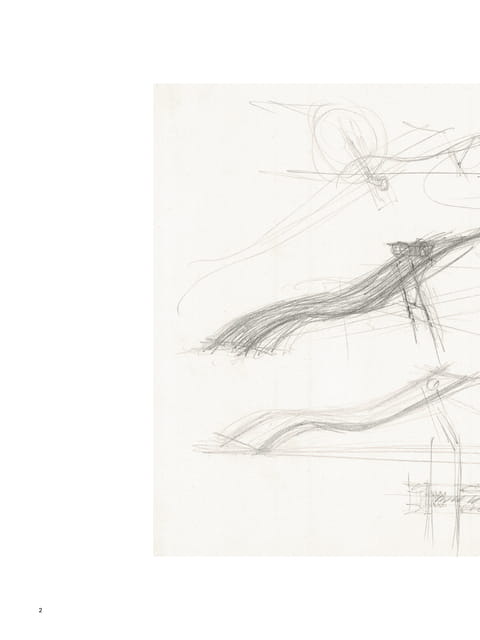
Page 004
2
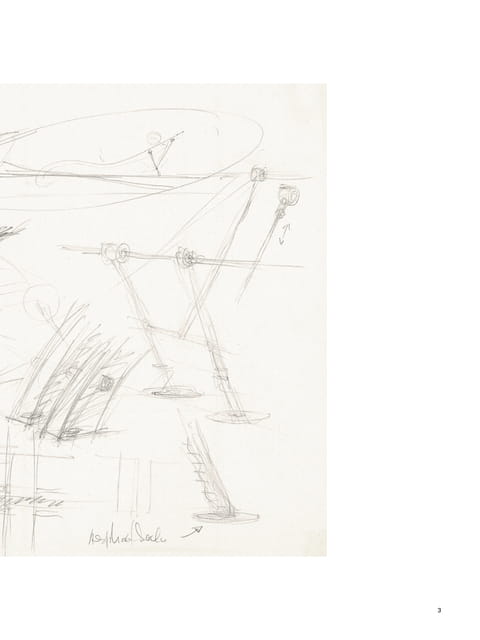
Page 005
3
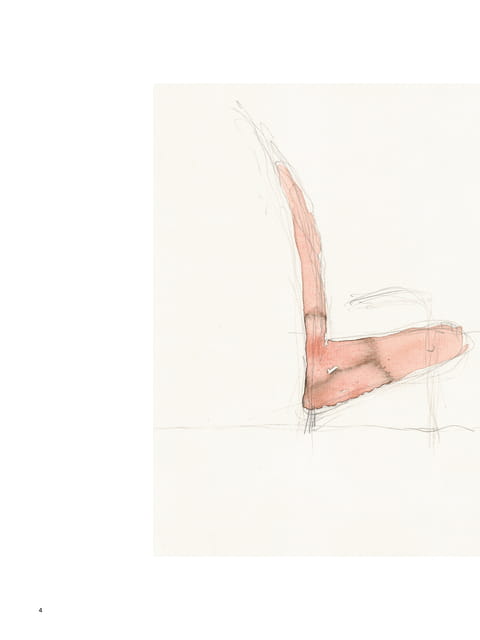
Page 006
4
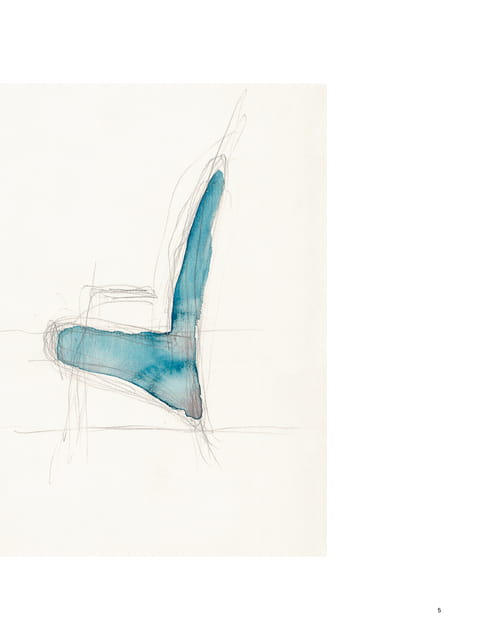
Page 007
5
Page 008
PeterZumthorcollectionThePeterZumthorcollectionisareconstitutionoffurnitureaccumulatedoverfiftyyears,designedandproducedspecificallyforthearchitecturalprojectsofSwissarchitectPeterZumthorandhisatelier.ThefurniturecollectionisnowbeingproducedbyTime&Style,realizedbymaterialsandmanufacturingtechniquesfromJapan.PeterZumthorcreatesfurnitureaspartofthearchitecture.Hedoesnotdesignthemindividuallyorcommercially.Hisfurnitureisintertwinedwiththearchitecturalnarrative,andthusisafragmentoftheuniversalityofhisworks.DevelopingeacharchitecturalprojectatAtelierPeterZumthortakesanenormousamountoftimeandenergy.Nevermakingcompromises,someprojectscouldtakeaslongastenyears,examiningandreexaminingthedesign,form,structure,andmaterialsthroughmodelsofvariousscales.Thefurnitureforsuchuncompromisingandmeticulousworkrequiresthesame.Time&StylecreatedthePeterZumthorcollectionusingtraditionalmaterialsandtechniquesthatoriginatedinthehistoryandcultureofJapan.ThereisachemistrybetweenZumthor’sconceptofcreatingauthenticanduniversalarchitecturethattranscendstimeandtheJapaneseartisanshipthathasbeenpasseddownfromgenerationtogeneration.Hisworksembracethetimeandwouldremainaspartofthelandscapeinthedistantfuture.Thus,PeterZumthorcollectionwillbecomepermanent,acollectionthattranscendstime.6
Page 009
PeterZumthorcollectionはスイス人建築家ピーター・ズントー及びアトリエ・ピーター・ズントーが半世紀以上を掛けて実現させてきた建築プロジェクトのためにデザインし、製作された家具を編集・再構成したものです。そして、日本の家具ブランドであるタイムアンドスタイルが日本の素材と製造技術で製作し、製品化した家具コレクションです。ピーター・ズントーは、家具を建築の一部として製作しており、家具のみをデザインすることはなく、家具の製品化を目的としてデザインすることもありません。故に、建築と家具の文脈を結びつけてデザインされた家具は、ズントーの普遍的な建築の断片を切り取ったものでもあるのです。アトリエ・ピーター・ズントーが手がける建築プロジェクトは設計のプロセスに膨大な時間とエネルギーが注がれ、妥協を許すことなく進行されます。長いものであれば10年以上の歳月を費やしてデザインの考察を繰り返し、形状や構造、素材の検討を行い、様々なスケールの模型で検証を重ねながら実現へと向かいます。こうした建築物のためにデザインされる家具もまた同様に、一切の妥協もありません。タイムアンドスタイルは日本の歴史と文化を背景とした伝統的な素材と技術を用い、PeterZumthorcollectionの家具を製作しました。永きに渡り日本に受け継がれている伝統を生かしたものづくりは、ピーター・ズントーが考える、長い時間軸に耐え得る本質的で普遍的な存在となる建築の創造と言う概念との親和性を持ちます。彼が生み出す建築は、その土地の風景の一部となって遥か先の未来にも存在するように、時間の概念を内包しています。PeterZumthorcollectionもまた普遍的な存在となる未来のパーマネントコレクションと言えるのです。7
Page 010
8
Page 011
9
Page 012
10
Page 013
11
Page 014
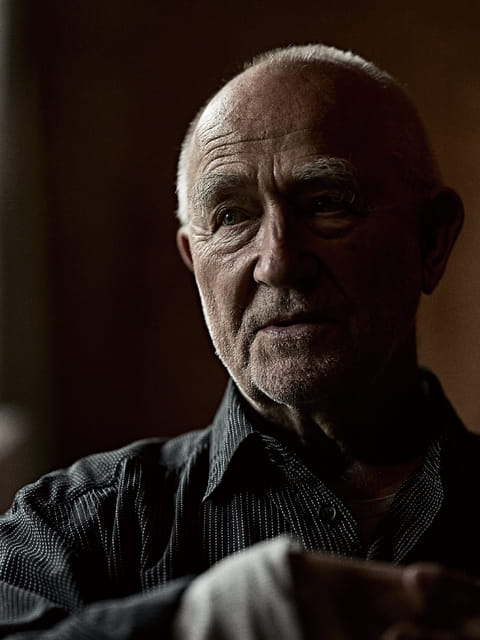
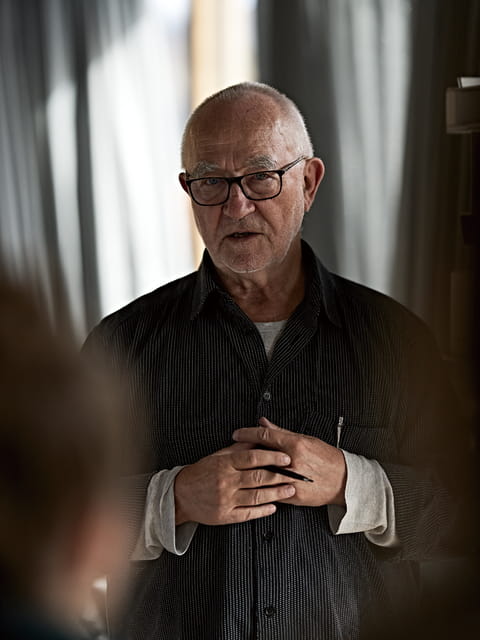
PeterZumthorPeterZumthorwasbornonApril26,1943,asthesonofacabinetmakerinBasel,Switzerland.Afterfinishinghiscarpentryapprenticeshipfrom1958to1962,hethenproceededtostudydesignatPrattInstituteinNewYorkfrom1963to1967.In1967,hebecameanarchitectfortheDepartmentforthePreservationofMonumentsinCantonofGraubünden,Switzerland.In1979,heestablishedhisatelierbasedinHaldenstein,Switzerland,wherehehasbeenpracticingarchitectureeversince.HehasbeenaprofessorattheAcademyofArchitecture,UniversitádellaSvizzeraItalianainMendrisiosince1996.HehasalsotaughtasavisitingprofessorattheSouthernCaliforniaInstituteofArchitectureinLosAngeles,TechnicalUniversityofMunich,andHarvardGraduateSchoolofDesign.HismanyawardsincludethePritzkerArchitecturePrizein2009,theCarlsbergArchitecturePrize(Denmark)in1998,andtheMiesvanderRoheAwardin1999.In2006,hereceivedthePraemiumImperialefromtheJapanArtAssociation.In2013,theRoyalInstituteofBritishArchitects(RIBA)honoredhissignificantinfluenceontheadvancementofarchitectureandawardedhimtheRoyalGoldMedal.ピーター・ズントーは、1943年4月26日、スイスのバーゼルで家具職人の息子として生まれた。1958年から1962年まで家具職人としての訓練を受け、1963年から67年までニューヨークのプラットインスティテュートでデザインを学ぶ。1967年にグラウビュンデン州(スイス)の歴史的建造物保存局の建築家を務め、1979年にスイスのハルデンシュタインで自身の設計事務所を設立し、現在に至る。1996年からメンドリシオ建築アカデミーの教授を務め、ロサンゼルスの南カリフォルニア建築学校、ミュンヘン工科大学、ハーバード大学大学院デザイン研究科で客員教授を歴任した。2009年のプリツカー建築賞をはじめ、1998年のデンマークのカールスバーグ建築賞、1999年のミース・ファン・デル・ローエ賞など数多くの栄誉に輝き、2006年には日本芸術協会から高松宮殿下記念世界文化賞を受賞。王立英国建築家協会(RIBA)は建築の進歩に対する彼の影響を称え、2013年にロイヤルゴールドメダルを授与した。12
Page 015
Page 016
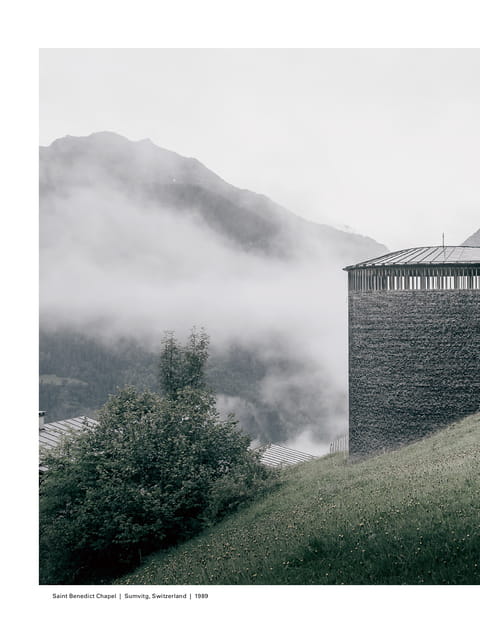
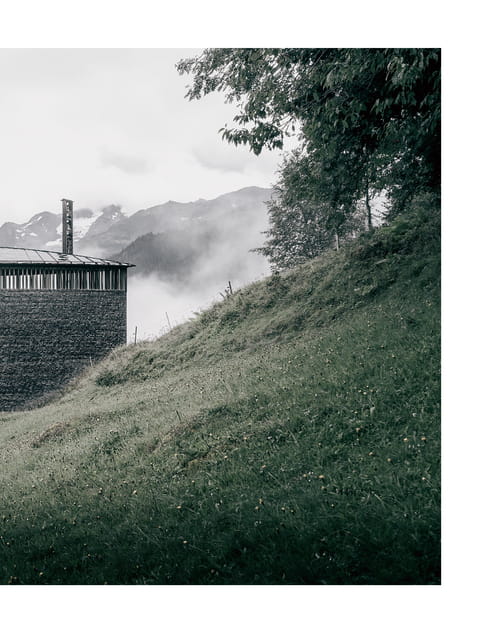
SaintBenedictChapel|Sumvitg,Switzerland|1989
Page 017
Page 018
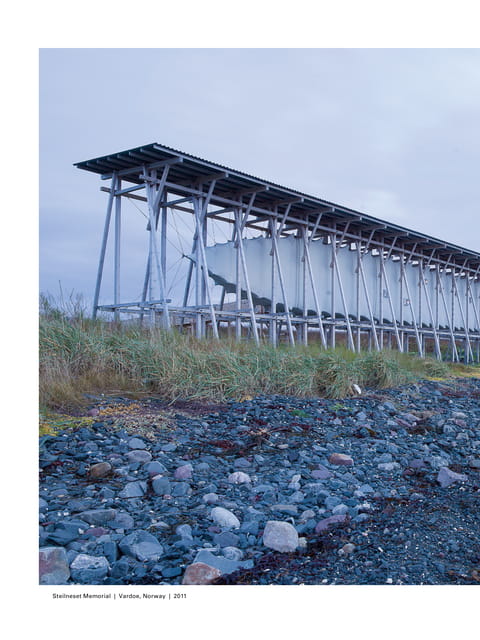
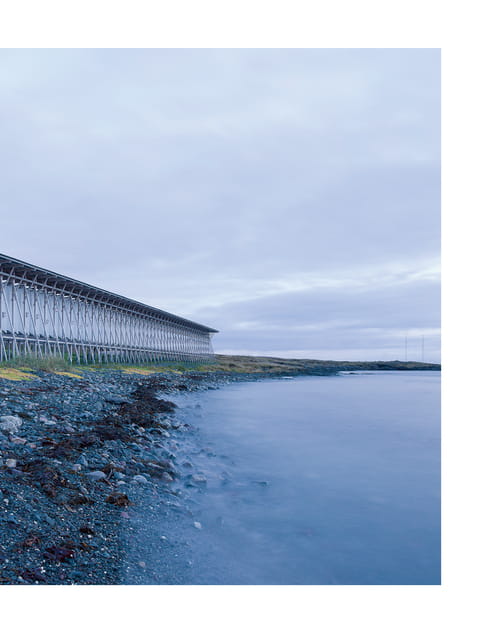
SteilnesetMemorial|Vardoe,Norway|2011
Page 019
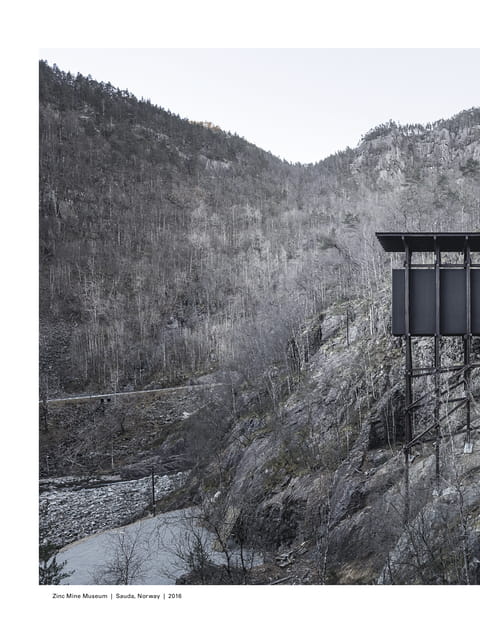
Page 020
ZincMineMuseum|Sauda,Norway|2016
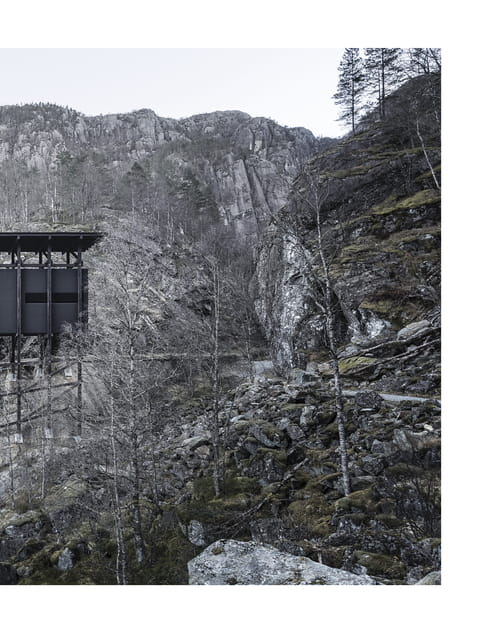
Page 021
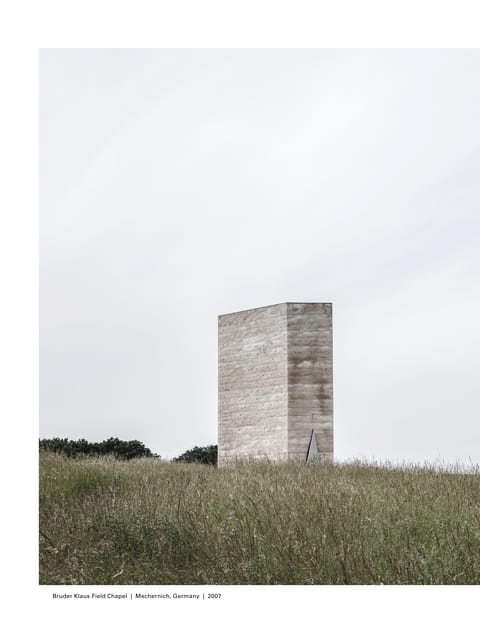
Page 022
BruderKlausFieldChapel|Mechernich,Germany|2007
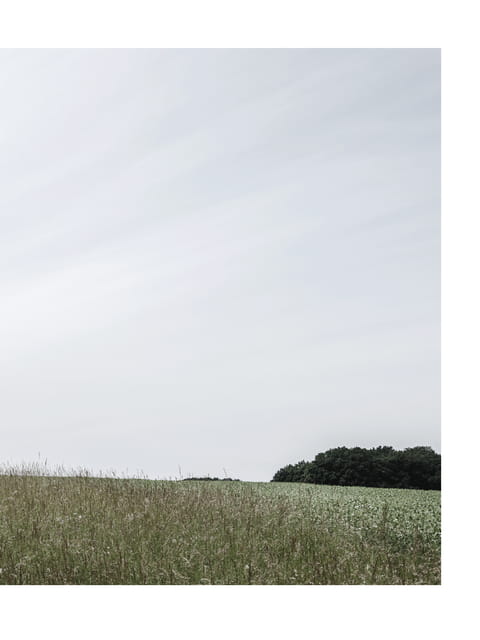
Page 023
Page 024
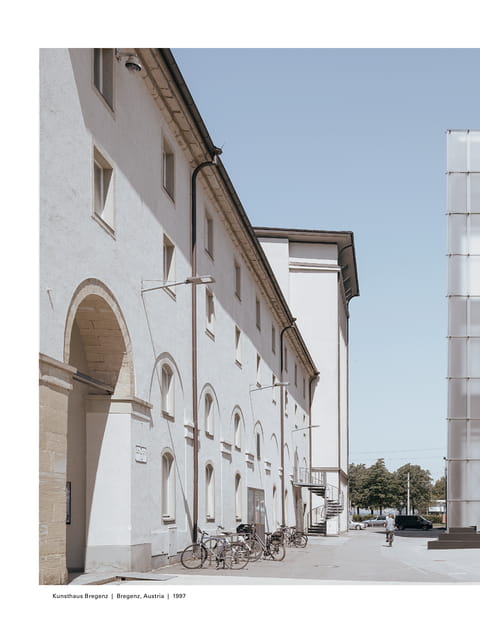
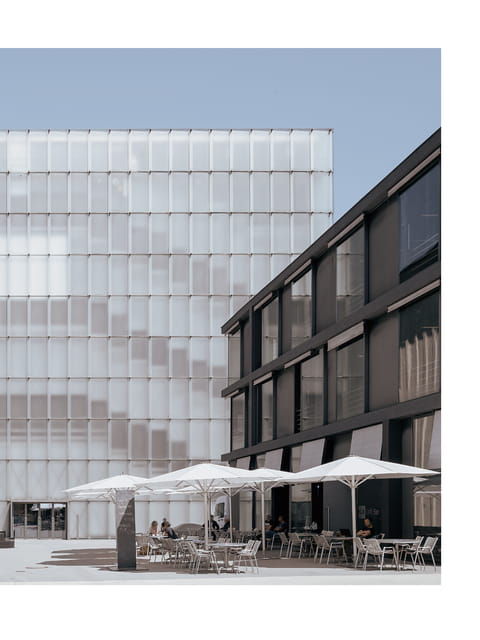
KunsthausBregenz|Bregenz,Austria|1997
Page 025
Page 026
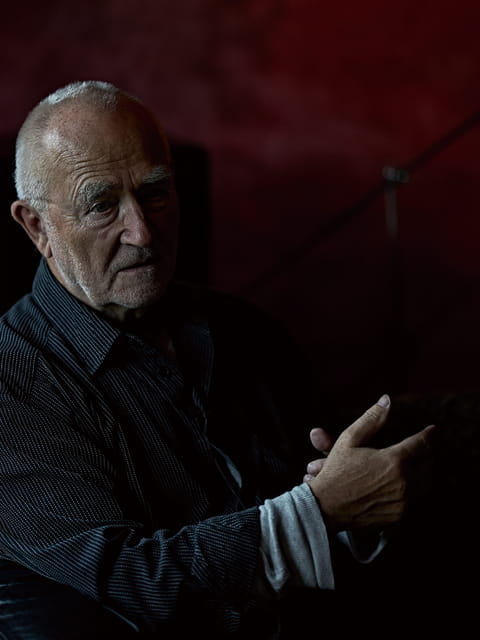
Architectureandfurniture—I’veheardwhenyouwereyoung,youstudiedwoodcrafts.Alsothatyourfatherwasafurnituremaker.Asafurnituremakermyself,Iwouldlovetoknow.Whatdidyoudobackthen?ZumthorSwitzerlandhasthissystemofapprenticeship.There’salsoabitinAustriaandGermany,butinSwitzerland,it’safederaldegreeregardingallthetradesthatyoudowithyourhand.Youcantakeanapprenticeship,gotoschool,andthenafterthreeorfouryears,yougetapaperthatyouareatrainedplumber,atrainedroofmaker,andsoon.Thissystemisverygood,andIlikethis.ButIdiditbecauseofmyfather.Hewantedmetodothis,totakeoverhisshop.SoIlearnedthecraft.—Iimaginebackthen,maybe60yearsago,itwasnotthesameastoday.Whatkindofthingswereyouusingtomakefurniture?States,asyouknow,itisalreadylikeafranticsearch.Youwouldspendformorethanforayearorso,thatisifyoucouldfindsomebodywhocanworkwithhisorherhandsanddosomethingbeautifulonahigherlevel.Ithasbecomerare.Here,itstillexists.Forinstance,thisguyhereattheentrancedoor,he’safurnituremaker,awoodworker.Heisgood.Hecandoanything.—Whatkindofproductswereyoumakingatthattime?ZumthorTherewereallkindsofcommissionsthatmyfatherwouldget.Itwasatimewhenthelocalcarpenterwouldworkforthelocalpeople.It’sstartingtogotoanend,buthere,thingsweresortofcustom-made.Youcouldgotohimandsay,“Iwantthatinthelivingroom”or“Iwantsomethingbuilt-inhere”orso.That’sthekindofwork.ZumthorTheexams,theywerestillaboutoldtypeoffurnituremaking.Everyday,furnituremakingwasalotaboutusingplywoodandusingparticleboard–alotofboringworks.Becauseyouhadtodomanythings,itishardtorecall.Butnow,Idon’tknow,it’sevenmoretechnicalandyouhavetolookoutforsomuch.Butitstillexists!Here,itstillexistsinthisareanearby,withpeoplewhocanmakesomethingbeautifulwiththeirhands,andcareaboutthisconceptofcustom-made.IntheUnited—Wehaveanimpressionthatyoualwaysusewoodforyourprojectsand…ZumthorWow,you’rewrong!InKunsthausBregenzthereisnotonepieceofwood,inThermeVals,thereisnowood.Exceptforthisthing,everythingiswood.Sothere!It’snottrue.—Soyoualwayspayattentiontothematerials.Whatdothematerialsmeantoyou?24

Page 027
Page 028
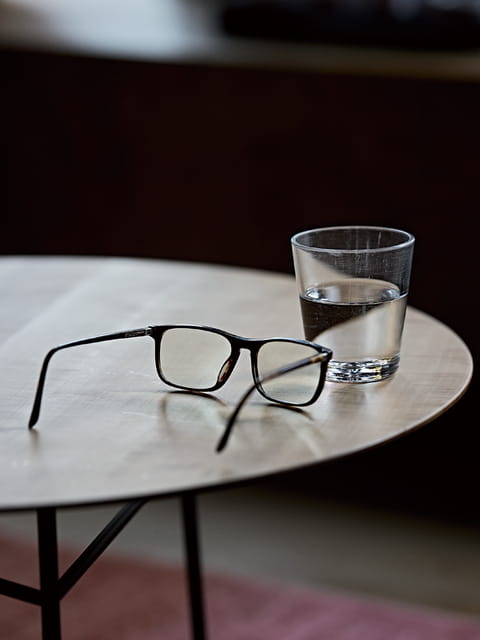
ZumthorThematerialscomefromtheearth,fromourplanet,andtherearealotofthem.Theyallsomehowderivedfromthisworld.Andthenyouputtogetherahouse,youcancreateabeautifulharmonybychoosingtherightthings.Thisistextile,thisisplants,thisisfromanimals,thensteel,wood,glass,andstone.Thisisthetaskofarchitecture.Architectureisnotvirtual.Myarchitectureisnotvirtual.Myarchitectureisreal.—Isee.NowIwanttoaskyouaboutthefurniture.Whenyoudesignfurniture,howdoyoucreateyourideas?ZumthorIdon’tthinkIhavetocreateideas.It’smoreaboutwhatwouldbenicetohave.Andifthemarketalreadyofferssomethingnicetohave,whynotuseit?Butsometimesthereisnothingonthemarket,likeapeppermill.Ididn’tfindagoodpeppermill,soIsaidlet’sdoone.It’smorelikecandlesforthehouse,somethingspecial,thatIneedforthehouse.ThenIdecidethisforthehouse.BecauseIknowwhatIammissing!Iknowthetool.It’sthemostsimplethingbutIammissingit.—Thankyouforsharingthat!Howabouttherelationshipbetweenfurnitureandhumanlives?andliveswithit.Ihaveanicecollectionofthings,smallthings,biggerthings.Andtheyaresortoflikemyfriends,theyarearoundme.AndIcanseethisandlotsofpeoplehavethistoo.So,Ithinkit’sveryhumantohavethings.Sometimes,theycomefromtheoldertime.Theyconnectmetothelifeofancestors,orpeopleIdon’tknow,buttheywerepartoftheirlives.It’sverynicethatthingsarepassedon,andIalsoliketodofurniturewhichisworthyofbeingpassedon.—Irecallitwaswhenweweremakingthesecondprototypeofthe“workingtable”,wepreparedthreesamplesofthecornerofthetableforyou.Youtouchedtheedgesandexplainedtousthedifference,andendedupselectingthisone.Wedidproducethefirstprototypeaccordingtoyourdesign,butyoudecidedonadifferentone.Whywasthat?ZumthorYouknowthesharpedgesofthings,theyhadstartedinthe60swithmodernisticfurniture.Thentheystayedwithminimalism.ButwhenIcanholdthem,sometimestheedgesaretoohardforme.Buthere,theedgesarealittlebitmore,let’ssay,soft.Italsohastime,italsohasabitofstyle.Iguessit’sTime&Style.ZumthorItbelongstotheseriesofobjectsandthings,whicheveryhumanbeingcollectsinhislife—Thankyou.Howaboutyourdesign?Isitalsochangingwithtime,ormorespecificallyyourage?26
Page 029
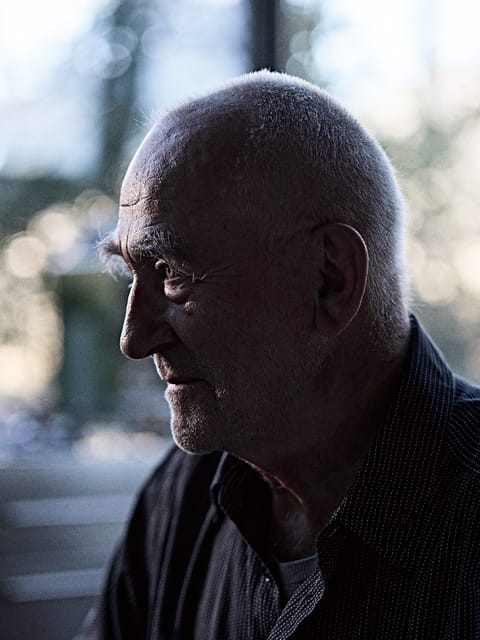
ZumthorIdon’thaveastyleoraform.IthinkIhaveanattitudetowardthings.Andtheyareverymuchconnectedtomyselfandwhathappensaroundme.Atthemoment,theworldisgettingextremelyartificial.Thereareallthesevirtualtoolsaroundusliketheinternet,andweseemtobeconnectedtoeverythingatthesametime.Butmyobservationaboutpeopleisthatwearelessconnected.Wehavejustapartofalltheinformation,butit’sallcompletelyflat.Itdoesn’tgodeep,anditkeepsusracing,racing,racingallthetime.Yesterday,Iwasreadingsomethingfromaguywhodiedacoupleofyearsago.Ithinkhewasaphilosopher,aGermanguy,RogerWillemsen,averyniceguy.Sohesays,intheseexactwords,“Wewereconnectedtolifeandtoourwork,andwecouldbeunhappy,wecouldbeunsure.Andthoughitcouldbedifficult,allthesethingscameoutof,assuggestedbefore,outofmissingsomething.”Now,everythingissoefficient.Everythingislike:thisyoucansay,thisyoushouldnotsay,thisiscorrect,thisisnotcorrect.Nowcomingbacktoarchitecture,Ithinkmyarchitecturegetsmoreandmore…rough!Theoppositeofslick.—Yesterday,wevisitedSt.BenediktChapel,ZumthorThat’soldwork.—Yes,andIfelttheworkwasverypreciseandsensitive,likefunctionalpieces.Ialsofeltasifwewereonabigboat,andtheroundwoodenpiecesoutsidethechapelwerethefish.Thatwasmyimpression.ZumthorThat’sgoodyouwentthere.So,youdon’tbelongtothepeoplewhosay,“whyisyourarchitecturealwayssquareandstraight?”I’dsay,that’snottrue.—No,theyaren’t.ZumthorOr,whyisyourarchitecturealwaysinwood?Nottrue!—No,theyweren’ttrue!ZumthorThisis,ifyouevergo,Ihavemadeanotherchapel,20or25yearslaterthantheSt.BenediktChapel.Thisismoreexistential.It’snothinglikethechapelImadeupthere.Backthen,Ipromisedtothepriest.Itoldhim,listen,Iamnotintochurchanymore.IwentoutoftheCatholicChurch.ButIcouldmakeyouachapelwiththeconsciousnessofa17-year-oldboywholovessittinginachurch.Iwouldliketobethere,andthat’sgoodenough.Iguessthat’swhatIdid.It’sa27
Page 030
warmhearted,sentimental,andromanticpiece.That’showIfeltthen,asaboy,forthechurch.Ididn’tbelieveinauthority.Thisisnotanauthoritarianchapel.It’smoreofasoftpiece.AndthechapelIdidinGermanymuchlaterismoreessentialandmore…fullofquestions.ThereisaniceessaybyaHungarianphilosopher.Doyouknowthisone?—No,Idon’t.—WhenImetyouprobablythreeyearsago,inthefirstimpressionyouremindedmeofaJapanesemonk.Thatwasjustmyimpression.AndwhenIseeyourarchitecture,IsometimesfeelthereissomethingJapaneseaboutit,andthatthereisaffinity.ZumthorThatsoundslikeacompliment.—Yes,itis.Becausewemakefurniture,Idofeelthereisacertainsimilarityorrelevancy.Producingyourfurniturewasverydifficult,butitwassuchagreatpleasuretoworktogetheragain.Wefeltthatyouhaveaclearunderstandingofthematerial,andalsohowtousethem.ZumthorLászlóFöldényi,heisaspecialistonmelancholia.And,hewritesthisessayonthechapelofBruderKlaus,andwhathethoughtaboutit.Thenlaterhewrites,“YearslaterIwaswalkinginParis,thenIsawadisplaywindowandsawanobject,whichIlikedalot.ThenIwentinsideandboughtiteventhoughitwasexpensive.Later,Iusedit,”andhereheistalkingaboutthispeppermill.Hesaidhelikedit,and“laterturneditaroundandthenIread:PeterZumthor.”Andthenheknows,“it’sthesamepersonasthischapel!”Hesawthechapel,hewroteaboutit,laterhesawthepeppermill,heboughtit,andthenlater,heturneditaroundandread:PeterZumthor.ZumthorIgrewupinthisfamilyofcraftsmen.So,alreadyasaboy,Icouldusemyfather’sworkshop.Wedidn’thavesomuchmoneybuthadlotsofchildren,soImadeallmytoysandgamesbymyself.Andmyfatherletmeuseallhistoolsandallhismaterial.That’showitworked.Ithinkitturnedoutquiteokay.28
Page 031
Page 032
Page 033
—若い頃、木工芸を習っていたそうですね。また、お父様は家具職人だったそうですね。私も家具づくりに関わっているのですが、当時はどのような仕事をされていたのでしょうか?元の大工さんが地元の人たちのために働いていた時代です。だんだん廃れてしまいましたが、オーダーメイドで「これがリビングに欲しい」とか「ここに何か作り付けの家具が欲しい」とか、そういう依頼がありました。それに応える仕事でした。ズントースイスには徒弟制度があります。オーストリアやドイツにもあるのですが、スイスでは徒弟制度を利用して学校に通い、3~4年後に国の資格を取ることができます。例えば、配管工や屋根職人になるための訓練があります。とても優れた良い制度だと思います。私が徒弟制度を使ったのは、父の希望でした。父が私に家業を継がせたいと望んでいたからです。—あなたの作品には木が多く使われている印象がありますが…ズントーいいえ、そんなことはありませんよ。ブレゲンツ美術館では木を1枚も使っていませんし、テルメ・ヴァルスにも使っていません。ただ全て木材でできているものもありますが。—60年くらい前の時代だと思いますが、今とは違っていますよね。家具を作るのに、どのような道具を使っていたのでしょうか?ズントーまだ古いタイプの家具づくりでした。毎日、合板やパーティクルボードを使って家具を作り続けて――いわゆるつまらない作業でした。とにかくやらなければいけない作業が多かったんです。今はもっと技術的に進歩していて、さらに色々と見なければならないこともありますが…この地域にはまだ残っているんです。手仕事で美しいものを作れる人、それを大切にする人が近くにいます。ご存知のように、アメリカでは今や、手仕事で美しいものやレベルの高いものを作ることができる人を見つけるためには、必死に探しまわらなければいけません。1年以上はかかるでしょう。希少になってしまったんですね。しかし、ここでは違います。例えば、入口のドアのところにいる彼は家具職人であり、木工職人です。彼は優秀だし、どんなものでも作ることができるんです。—当時はどのような製品を作っていたのですか?ズントー当時、父にはいろいろな依頼がありました。地—そうでしたね。いつも素材に細心の注意を払っていらっしゃいますが、あなたにとって素材とは何でしょうか?ズントー素材は地球が与えてくれるものです。素材とは、いわばこの世界から生まれたもので、その素材を使って家を建てることで、美しい調和を生み出すことができます。これはテキスタイルで、これは植物、これは動物でできている、あとは、スチール、木、ガラス、そして石といった具合ですね。これが建築の仕事です。建築はバーチャルなものではありません。少なくとも私の建築はバーチャルではありません。私の建築は実在するものです。—なるほど。続いて、家具についてお伺いします。家具をデザインするとき、どのようにアイデアを生み出しているのでしょうか?ズントーアイデアは必要ないと思います。それよりも、あったらいいな、と思うものがあればいいんです。もし市場にすでに何かいいものがあるのなら、それを使えばいい。でもペッパーミルのように、市場に良いものがない場合もあります。家に飾るキャンドルとか、何か特別なものですね。家のために必要なものです。その家にふさわしいものがな31
Page 034
Page 035
いなら自分で作ろうと思います。何が足りないのか、何をすればいいのかを分かっているからです。往々にしてとてもシンプルなものですが、それが足りていないのです。—なるほど、素晴らしいですね。家具と人の暮らしとの関わりについてはいかがでしょうか?ズントー人間なら誰もが人生の中で集め、それとともに生きているモノやコトがたくさんあります。私は、小さなものから大きなものまで、素敵なコレクションを持っています。そして、これは私の友人のようなもので、彼らは私の身の回りにいます。多くの人がこういうものを持っています。だから、モノを持つことはとても人間らしいことだと思います。時にはそれが古い時代のものであったりして、先祖だったり、あるいは知らない人だったりと繋げてくれるようなことがありますが、どちらにせよそのモノは彼らの生活の一部だったんです。そんな風に受け継がれていくことはとても素敵なことだと思いますし、私も受け継がれるのに値するような家具を作りたいと思います。—たしか”workingtable”の2回目の試作をしたときだったと思いますが、私たちはテーブルのエッジのサンプルつ用意しました。あなたはそのエッジを触りながらそれぞれの違いを説明してくださり、これを選びました。1回目の試作品はあなたの図面通りに製作したのですが、最終的に初めのデザインとは異なるエッジに決めましたね。それはなぜですか?ズントー鋭いエッジは60年代にモダニズムとともに登場しました。それからミニマリズムにも受け継がれましたが、手に取ってみると、私にはエッジが硬すぎると感じることがあります。選んだエッジは少し柔らかめです。時間の経過があり、スタイルもあります。まさに「タイムアンドスタイル」のようなものですね。—ありがとうございます。あなたのデザインと年齢の変化についてはどうでしょう?年齢とともに変化していますか?ズントー私にはスタイルや形はありません。私は物事に対する姿勢を持っているだけです。そしてそれは、私の周りで起こっていることと密接に関係しています。今、世界は非常に人工的になりつつあります。私たちの周りには、インターネットのようなバーチャルなツールがあり、私たちはあらゆるものと繋がっているように見えますが、私が多くの人々を観察した限りでは、逆に繋がりは希薄になってきています。私たちは膨大な情報の一部にしか過ぎず、すべては完全にフラットなものです。そのため、私たちを常に駆り立て続けています。昨日、ある人の本を読んでいました。数年前に亡くなったロジャー・ヴィレムセンというドイツ人の哲学者です。とてもいい人でした。彼はまさにこう言っています。「私たちはかつて人生や仕事と繋がっており、不幸になることもあったし、不安になることもあった。いろいろな問題を抱えることがあったとしても、これらのことはすべて、先に述べたように、何かが欠けていることから生じたものだ」と。今は、すべてが効率的です。これは言ってもいい、これは言うべきでない、これは正しい、これは正しくない、とはっきりしています。さて、建築の話に戻りますが、私の建築はますますラフになり、洗練とは正反対になりつつあると思います。—昨日、私たちは聖ベネディクト教会を訪ねました。ズントー昔の作品ですね。—あなたのデザインはすべてとても正確で、とても繊細で、ひとつの機能的なピースのようでした。まるで大きな船に乗り込んでいるかのようでしたし、教会の外にある丸みを帯びた木製のパーツは魚のようでした。そのような印象を受けま33
Page 036
した。ズントーそう言ってくれて嬉しいです。あなたは「どうしてズントーさんの建築はいつも四角でまっすぐなのか?」と質問してくるタイプの人ではないんですね。私に言わせれば、それは違う。—ナチュラルですよね。ええ。中に入り、高価だったがそれを買って、」とここで彼はこのペッパーミルについて書いているのですが、彼はそれを気に入って、「後々それを裏返すと”PeterZumthor”と刻印されていた」と記しています。そして、「この礼拝堂と同じ人のもの!」と気づいたそうです。彼は、礼拝堂について執筆した後にそのペッパーミルを見つけて購入し、その後しばらくして裏返した時に、PeterZumthorと刻印されていることに気がついた、ということなんです。ズントーもしくは、「なぜ、あなたの建築はいつも木造なのですか?」とかね。そんなことはありませんよ。—そうでした。ズントー私は聖ベネディクト教会から20年か25年後に別の教会を作りました。それはもっと実存主義的なものです。あそこで作った教会とは違います。当時、私は神父と約束しました。私はもう教会に興味がなく、教会から離れました。でも、17歳の少年の時のように、ただ教会で座っているのが好きだった当時の気持ちで礼拝堂を作りますよ、と。実際にそうできたと思います。心温まる、センチメンタルでロマンチックな作品になりました。私は少年の頃、教会に対してそう感じていたんです。私は権威を信じていませんでしたし、これは権威的な教会ではありません。どちらかというとソフトな作品です。ずっと後にドイツで作った礼拝堂はもっと本質的で、より問いに満ちています。ハンガリーの哲学者の素敵なエッセイがあります。あなたは彼をご存知ですか?—いいえ。—3年前、私があなたに初めてお会いしたとき、第一印象ではあなたは日本の僧侶のような雰囲気がありました。私はそういう印象を持ちました。あなたの建築を見ていると、どこか日本的なものを感じたり、親近感を覚えたり、日本的なエッセンスが感じられます。ズントー褒めていただいているみたいですね。—私たちは家具を作っているので、あなたの作品とは類似性というか、関連性を感じます。あなたの家具を製作している時、それは非常に難しかったのですが、製作することはとても素晴らしいことでした。あなたは素材を深く理解されていて、その素材をどう使えばいいかを分かっていると感じました。ズントー私は職人の家に育ちましたからね。子供の頃から父の工房を使わせてもらえたんです。あまりお金はありませんでしたし、子供もたくさんいたので、おもちゃやゲームは全部自分で作りました。父は自分の道具や材料をすべて私に使わせてくれました。それがよかったんだと思います。ズントーラースロー・フェルデニは、メランコリアのスペシャリストです。ブラザー・クラウス野外礼拝堂についての感想をエッセイに書いてくれました。そして後に彼はこのようなエッセイも書いています。「数年後、パリを歩いていたら、ショーウィンドウにとても気に入ったものを見つけた。店の34
Page 037
Page 038
Page 039
Page 040
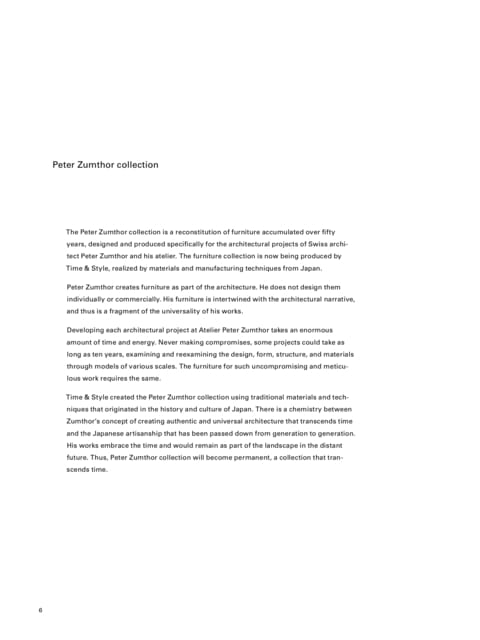
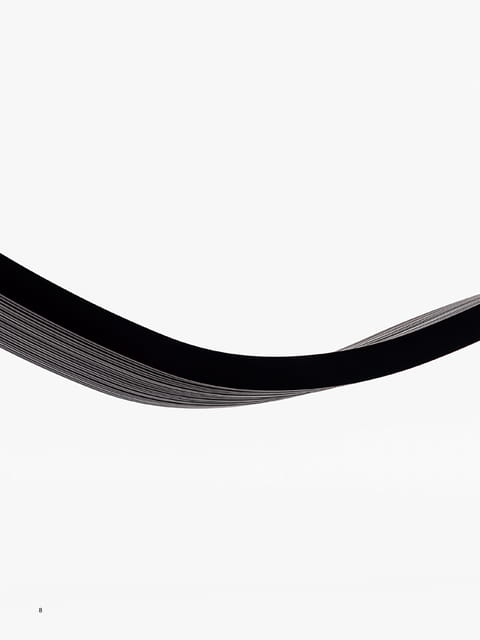
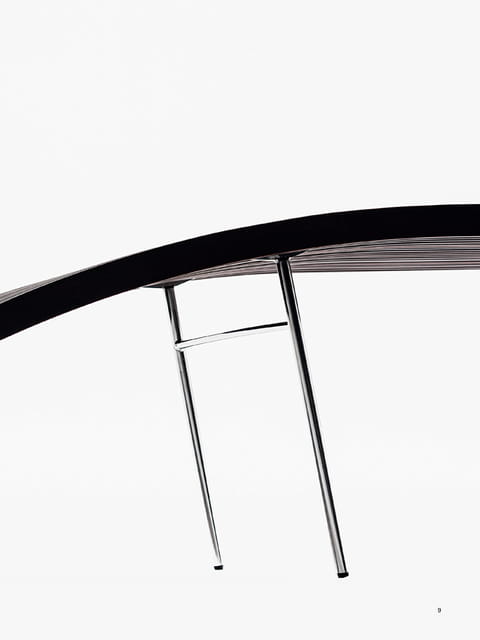
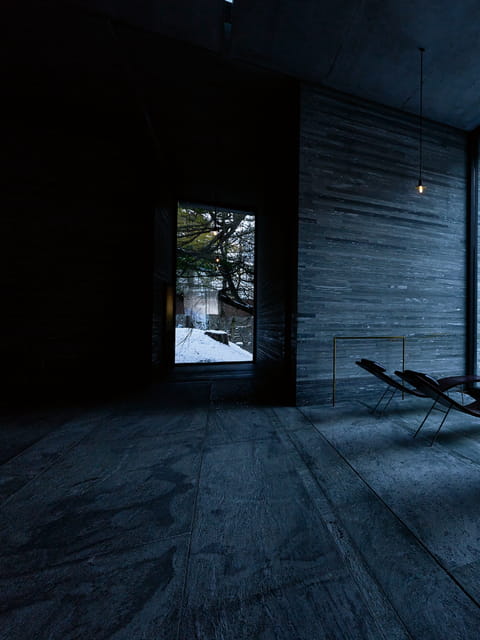
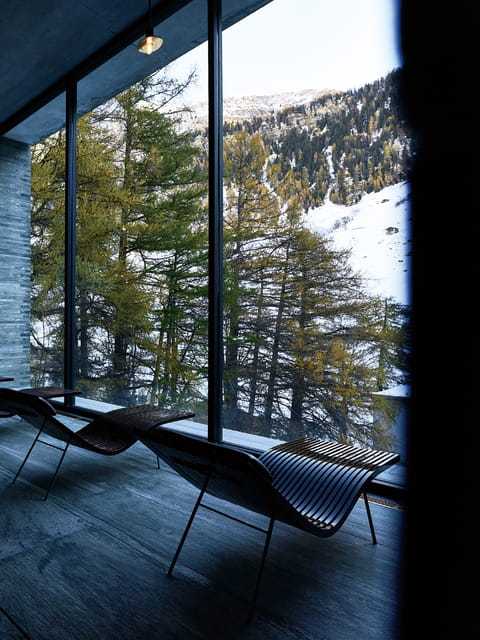
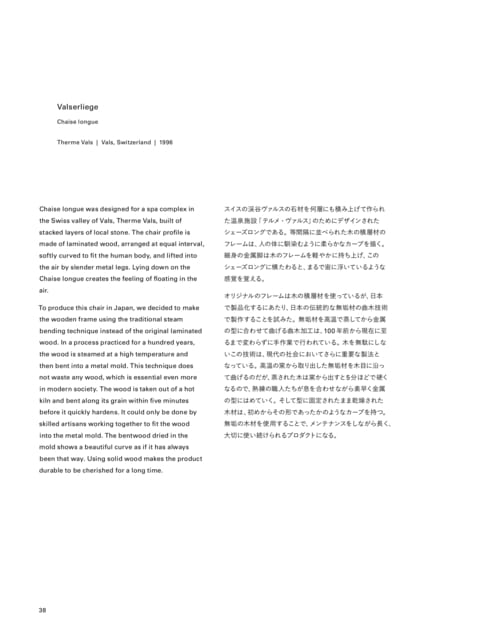
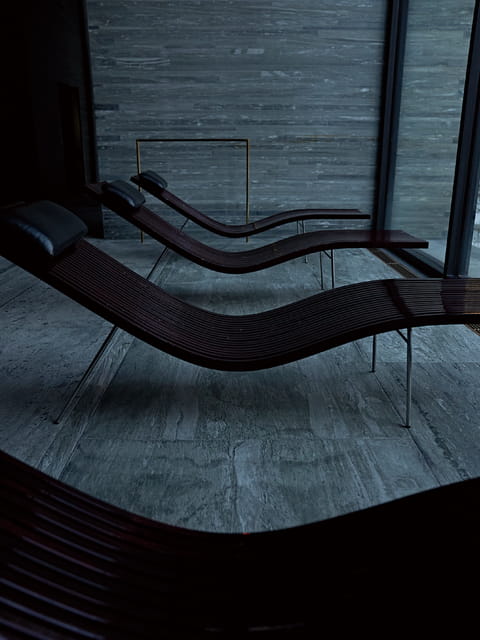
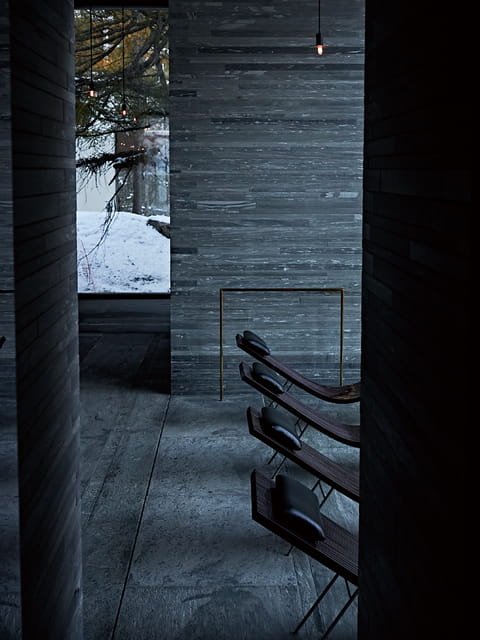
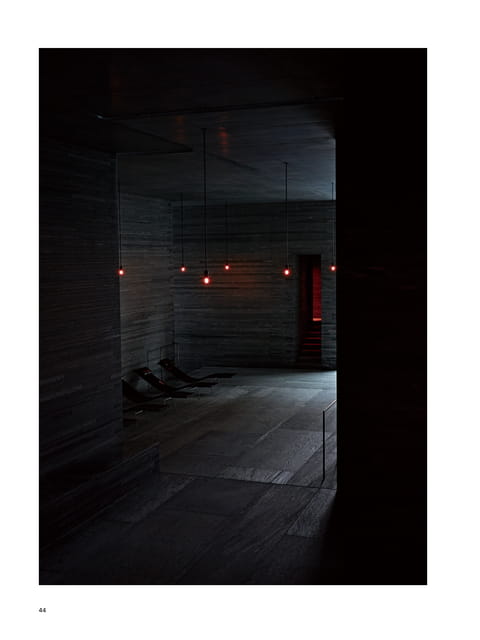
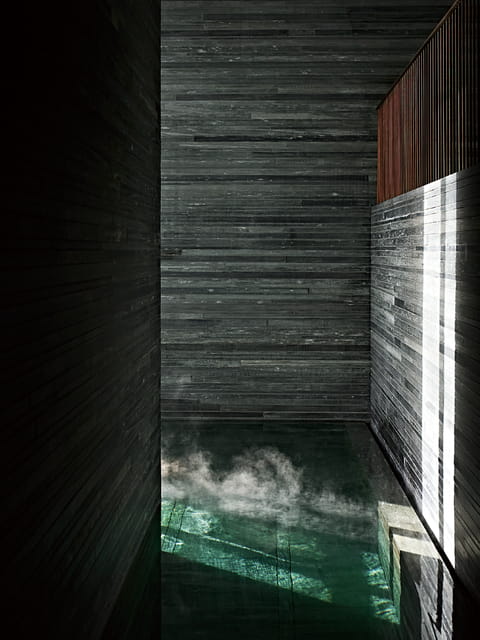
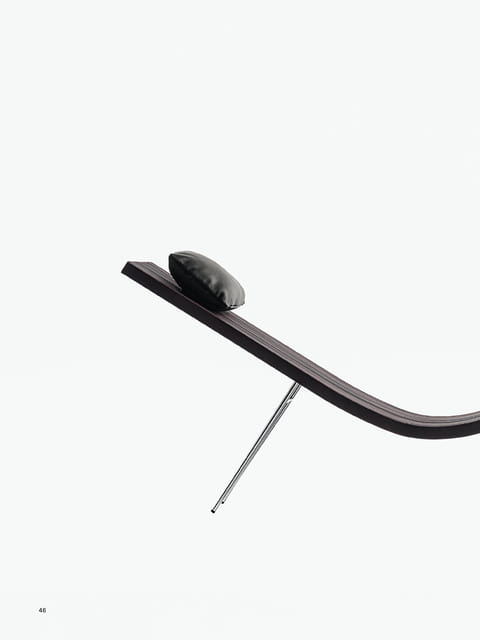
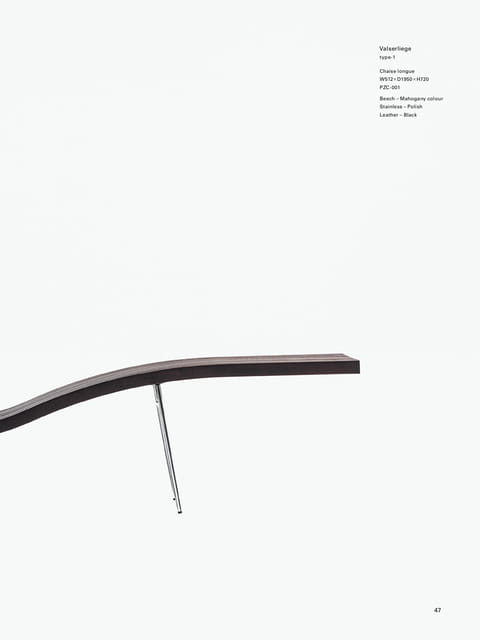
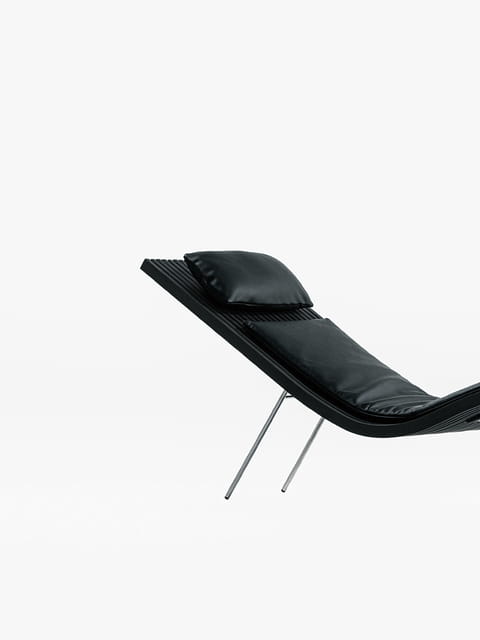
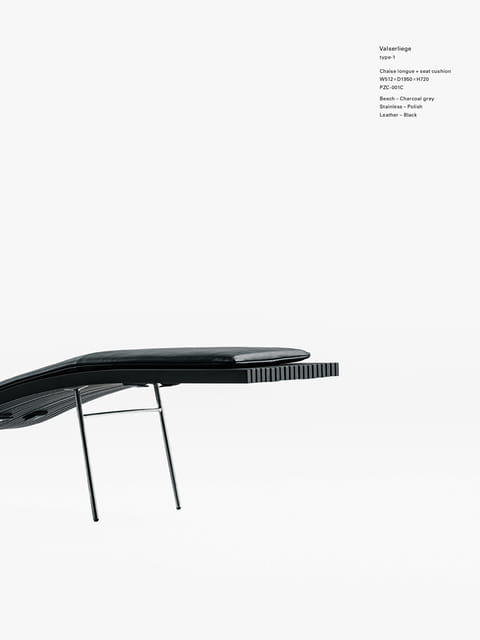
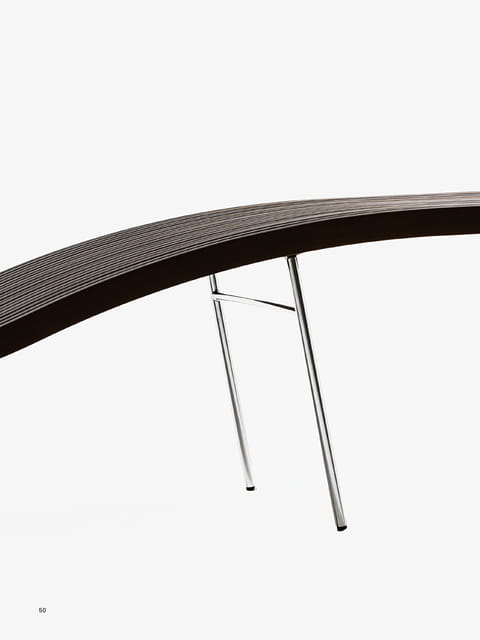
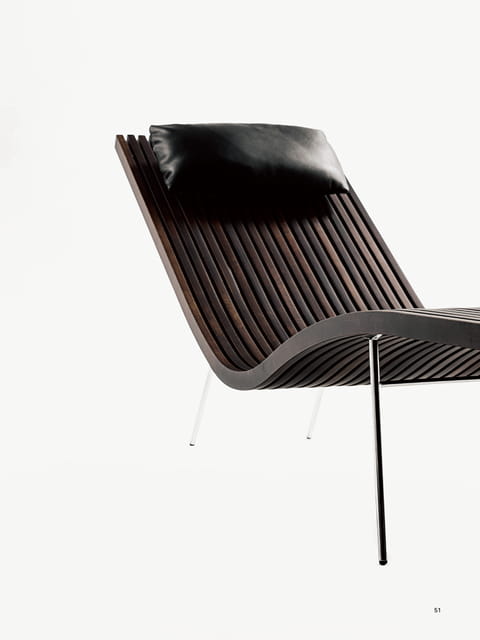
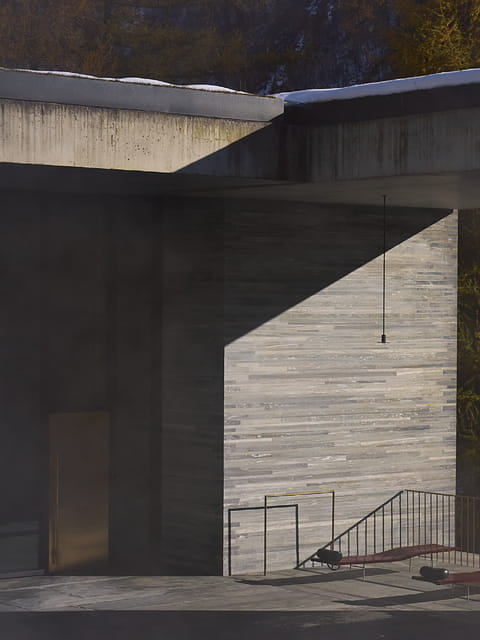
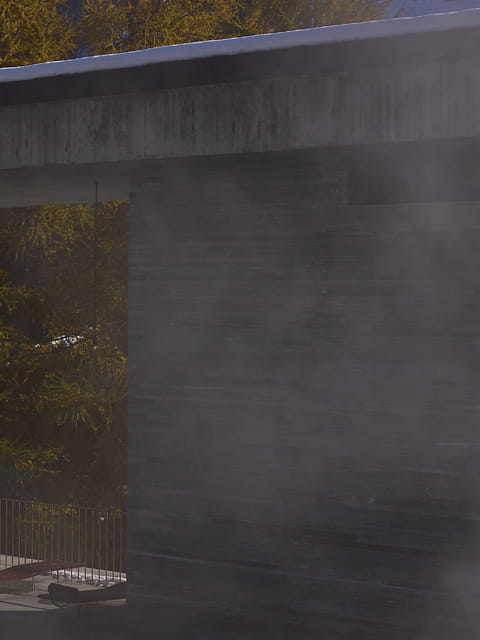
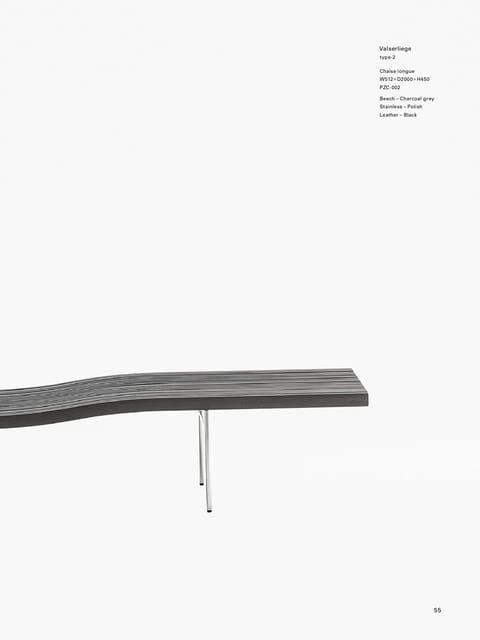
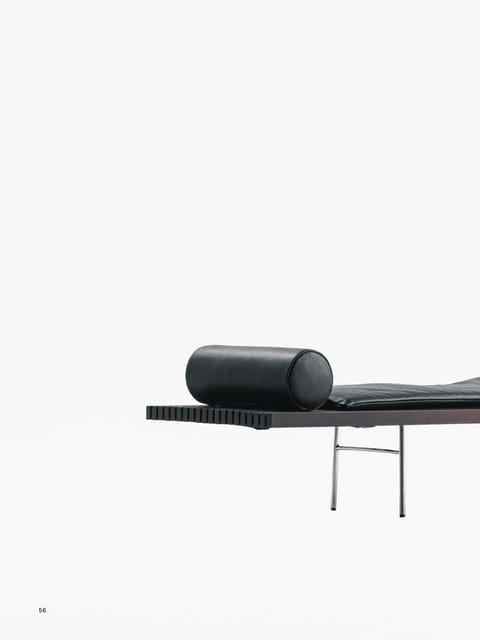
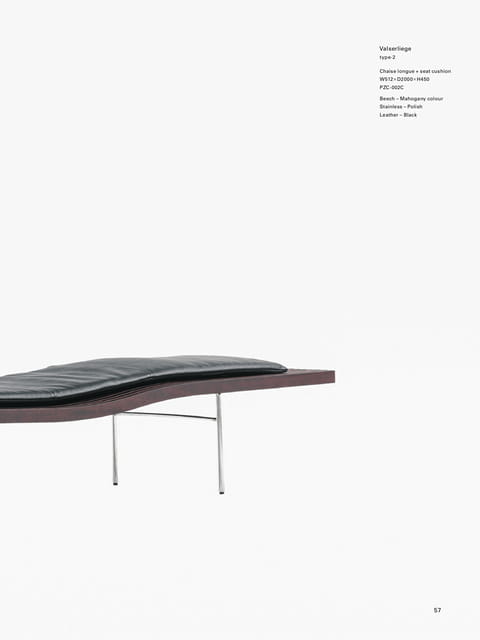
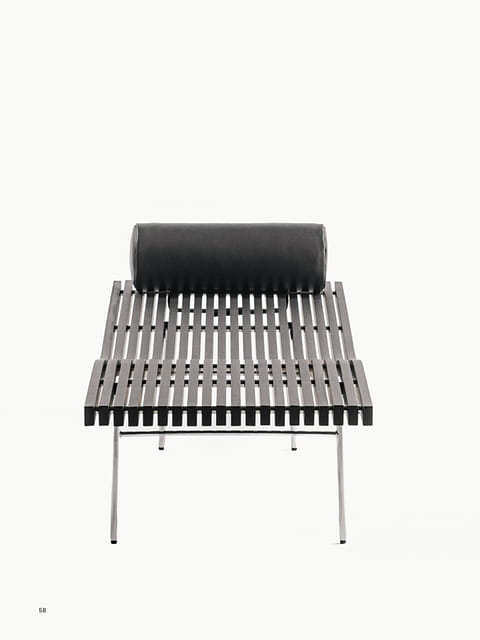
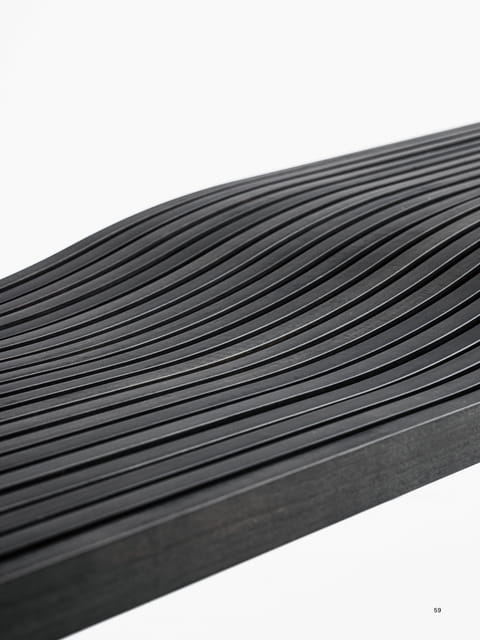
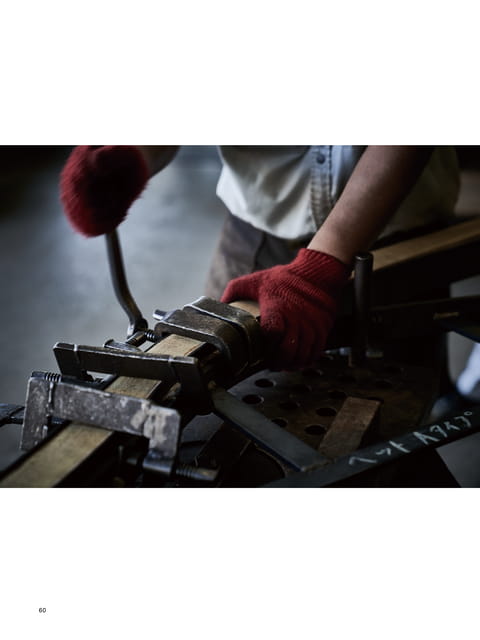
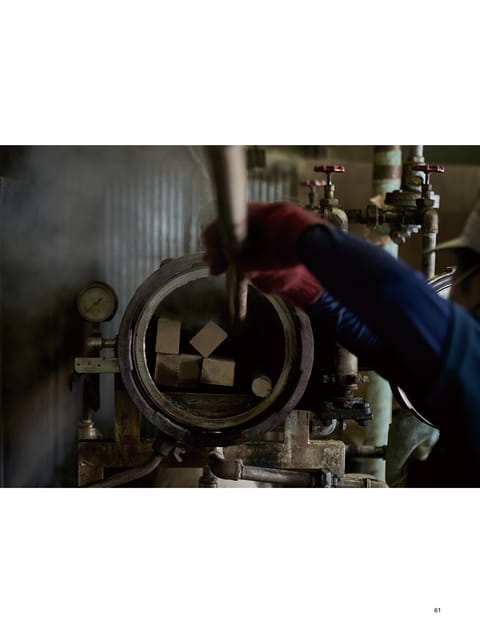
ValserliegeChaiselongueThermeVals|Vals,Switzerland|1996ChaiselonguewasdesignedforaspacomplexintheSwissvalleyofVals,ThermeVals,builtofstackedlayersoflocalstone.Thechairprofileismadeoflaminatedwood,arrangedatequalinterval,softlycurvedtofitthehumanbody,andliftedintotheairbyslendermetallegs.LyingdownontheChaiselonguecreatesthefeelingoffloatingintheair.ToproducethischairinJapan,wedecidedtomakethewoodenframeusingthetraditionalsteambendingtechniqueinsteadoftheoriginallaminatedwood.Inaprocesspracticedforahundredyears,thewoodissteamedatahightemperatureandthenbentintoametalmold.Thistechniquedoesnotwasteanywood,whichisessentialevenmoreinmodernsociety.Thewoodistakenoutofahotkilnandbentalongitsgrainwithinfiveminutesbeforeitquicklyhardens.Itcouldonlybedonebyskilledartisansworkingtogethertofitthewoodintothemetalmold.Thebentwooddriedinthemoldshowsabeautifulcurveasifithasalwaysbeenthatway.Usingsolidwoodmakestheproductdurabletobecherishedforalongtime.スイスの渓谷ヴァルスの石材を何層にも積み上げて作られた温泉施設「テルメ・ヴァルス」のためにデザインされたシェーズロングである。等間隔に並べられた木の積層材のフレームは、人の体に馴染むように柔らかなカーブを描く。細身の金属脚は木のフレームを軽やかに持ち上げ、このシェーズロングに横たわると、まるで宙に浮いているような感覚を覚える。オリジナルのフレームは木の積層材を使っているが、日本で製品化するにあたり、日本の伝統的な無垢材の曲木技術で製作することを試みた。無垢材を高温で蒸してから金属の型に合わせて曲げる曲木加工は、100年前から現在に至るまで変わらずに手作業で行われている。木を無駄にしないこの技術は、現代の社会においてさらに重要な製法となっている。高温の窯から取り出した無垢材を木目に沿って曲げるのだが、蒸された木は窯から出すと5分ほどで硬くなるので、熟練の職人たちが息を合わせながら素早く金属の型にはめていく。そして型に固定されたまま乾燥された木材は、初めからその形であったかのようなカーブを持つ。無垢の木材を使用することで、メンテナンスをしながら長く、大切に使い続けられるプロダクトになる。38
Page 041
Page 042
Page 043
41
Page 044
42
Page 045
Page 046
44
Page 047
Page 048
46
Page 049
Valserliegetype-1ChaiselongueW512×D1950×H720PZC-001Beech–MahoganycolourStainless–PolishLeather–Black47
Page 050
Page 051
Valserliegetype-1Chaiselongue+seatcushionW512×D1950×H720PZC-001CBeech–CharcoalgreyStainless–PolishLeather–Black
Page 052
50
Page 053
51
Page 054
Page 055
Page 056
54
Page 057
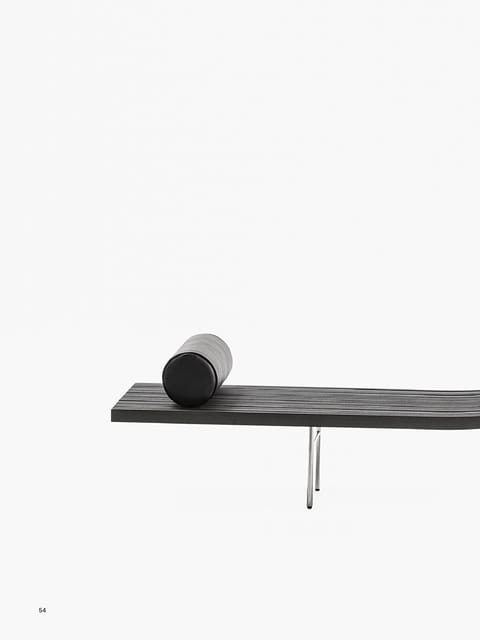
Valserliegetype-2ChaiselongueW512×D2000×H450PZC-002Beech–CharcoalgreyStainless–PolishLeather–Black55
Page 058
56
Page 059
Valserliegetype-2Chaiselongue+seatcushionW512×D2000×H450PZC-002CBeech–MahoganycolourStainless–PolishLeather–Black57
Page 060
58
Page 061
59
Page 062
60
Page 063
61
Page 064
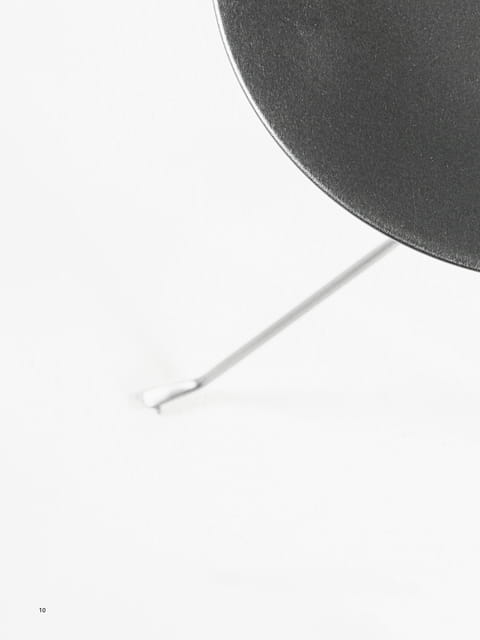
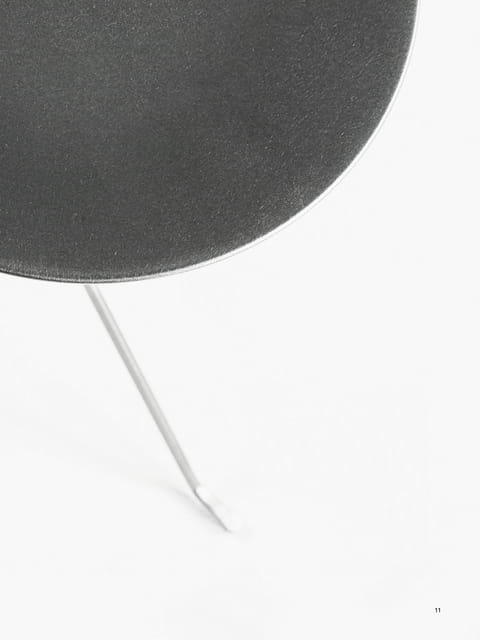
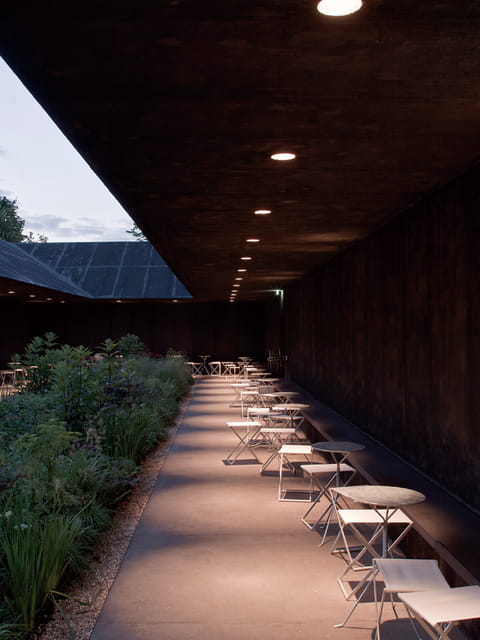
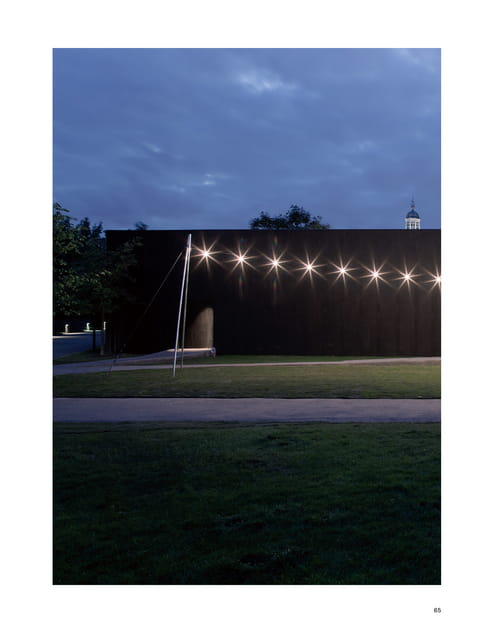
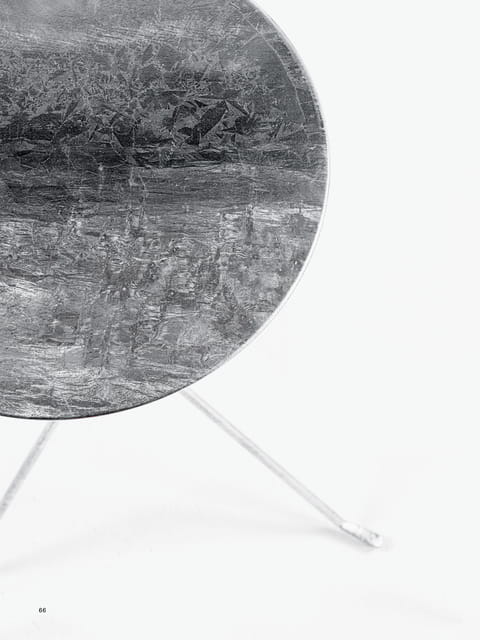
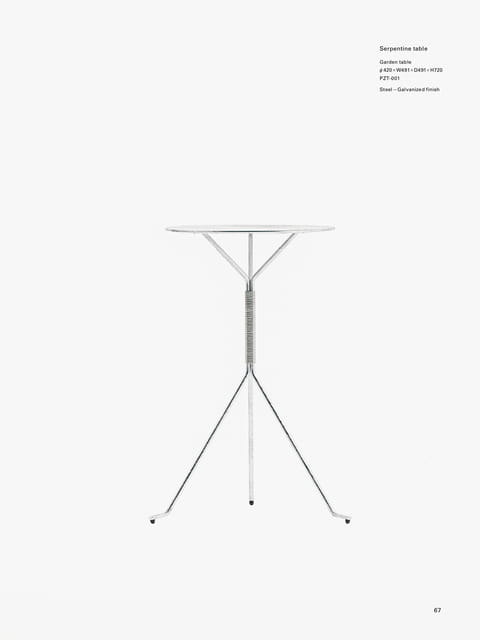
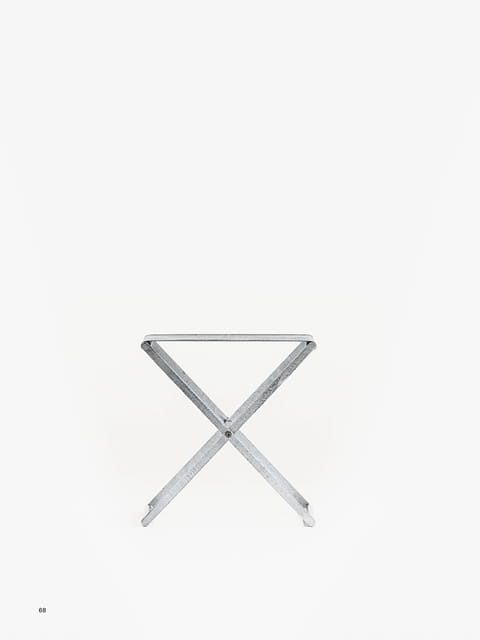
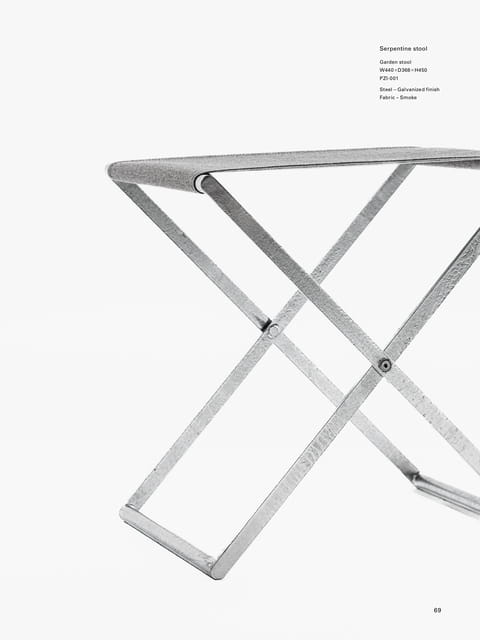
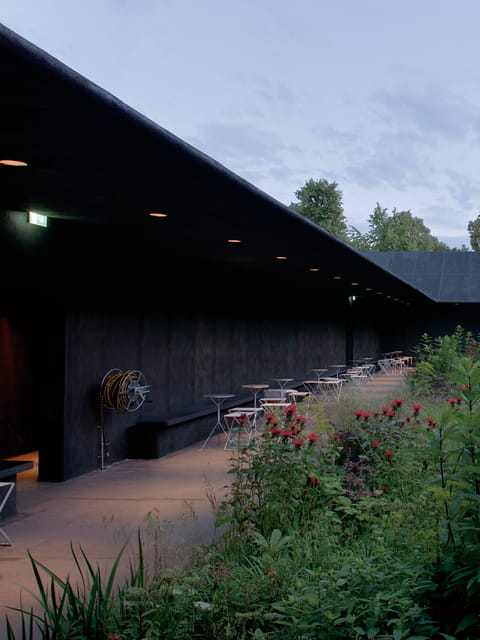
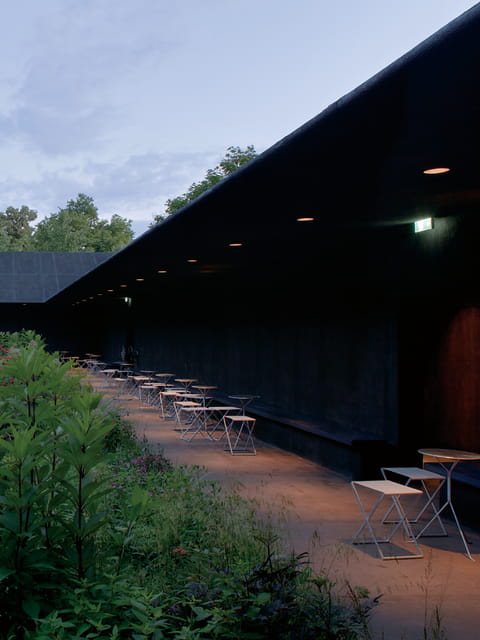
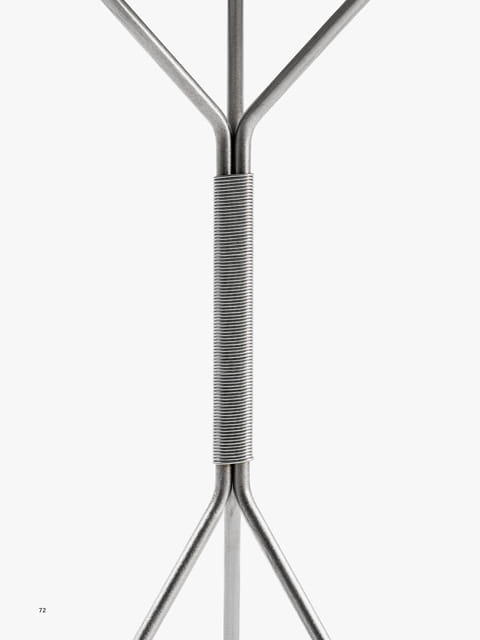
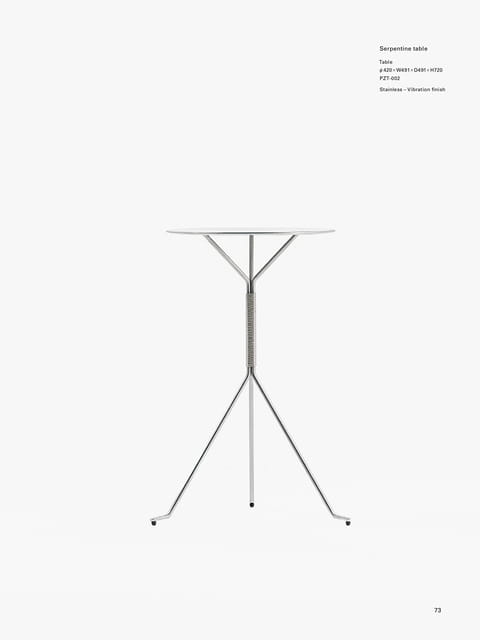
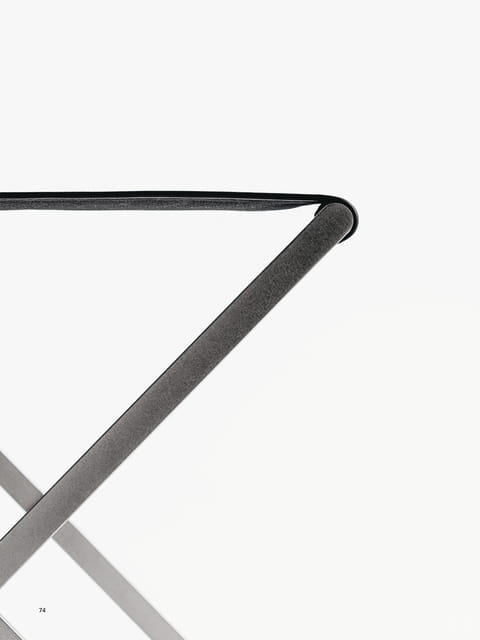
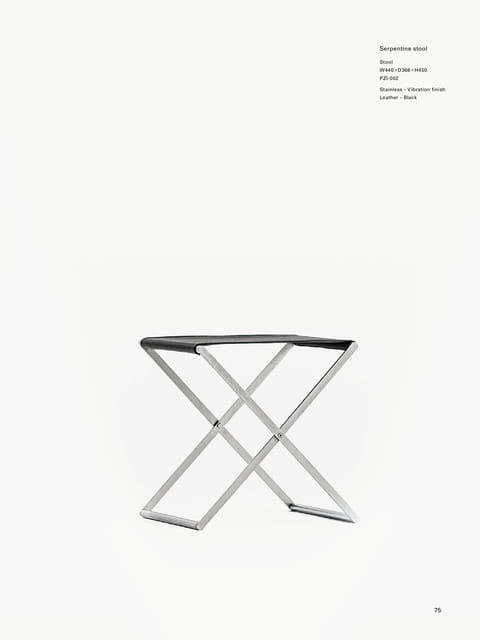
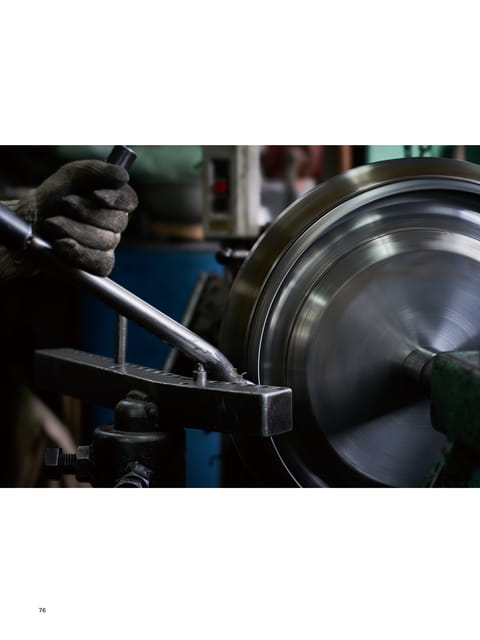
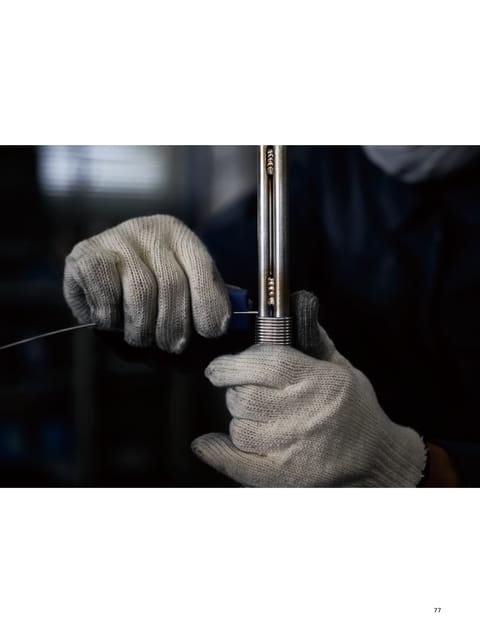
Serpentinetable,SerpentinestoolTableandstoolsSerpentineGalleryPavilion|London,UnitedKingdom|2011EachyearattheSerpentineGalleryinLondon,aworld-renownedarchitectisinvitedtoinstallapavilionduringthesummer.PeterZumthorwascommissionedtodesignapavilionin2011andthenhealsodesignedthetablesandthestools.Theproductisnotoverlydecorated,andtheproductionprocessisanintegralpartofthedesign.Forexample,theedgesofthetabletoparebentonebyonewithspininngtechnique.Itnotonlyensuressafetybutalsoallowsthemetaltabletogiveasofterimpression.Thethreethinlegsareboundtogetherwithwire.Thusthetablehasasimpleandcleanstructurewhilemaintainingitsstrength.Withahot-dipgalvanizedfinish,thecollectioncanbeusedoutdoors.Itcanalsobefoldedupforstorage.Avibratingstainlesssteelfinishhasalsobeenaddedasavarianttomatchthecalmindooratmosphere.Thecompactcombinationofthetableandstoolutilizesthelimitedspacetothemax.ロンドンにあるサーペンタイン・ギャラリーでは、毎年世界的な建築家を招いて、期間限定のパビリオンが設営される。2011年、ピーター・ズントーがこのパビリオンの設計を依頼された際に、建築に合わせてデザインしたのがこのテーブルとスツールである。このプロダクトは、過剰に加飾されることなく、作られるプロセスがそのままデザインの重要な要素となっている。テーブルの天板の端部は職人が1枚ずつ絞り加工によって手作業で折り曲げており、これによって安全性を確保すると共に金属製のテーブルに柔らかな印象を与えている。3本の細い脚はワイヤーで束ねられ、強度を保ちながらシンプルで明快な構成を表している。溶融亜鉛メッキ仕上のコレクションは屋外でも使用可能で、スツールは折り畳んで収納ができる構造となっている。屋内の落ち着いた雰囲気にも合うように、ステンレスのバイブレーション仕上げもバリエーションに加えた。コンパクトなサイズにまとめられたテーブルとスツールの組合せは、限られたスペースを有効に活用できる。62
Page 065
Page 066
Page 067
65
Page 068
66
Page 069
SerpentinetableGardentableφ420×W491×D491×H720PZT-001Steel–Galvanizedfinish67
Page 070
68
Page 071
SerpentinestoolGardenstoolW440×D368×H450PZI-001Steel–GalvanizedfinishFabric–Smoke69
Page 072
Page 073
Page 074
72
Page 075
SerpentinetableTableφ420×W491×D491×H720PZT-002Stainless–Vibrationfinish73
Page 076
74
Page 077
SerpentinestoolStoolW440×D368×H450PZI-002Stainless–VibrationfinishLeather–Black75
Page 078
76
Page 079
77
Page 080
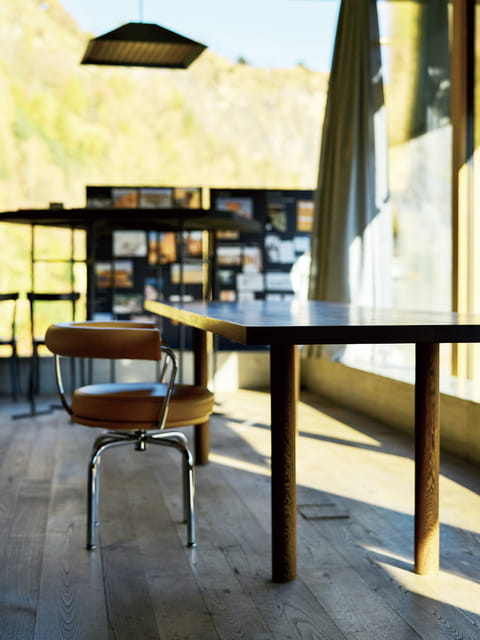
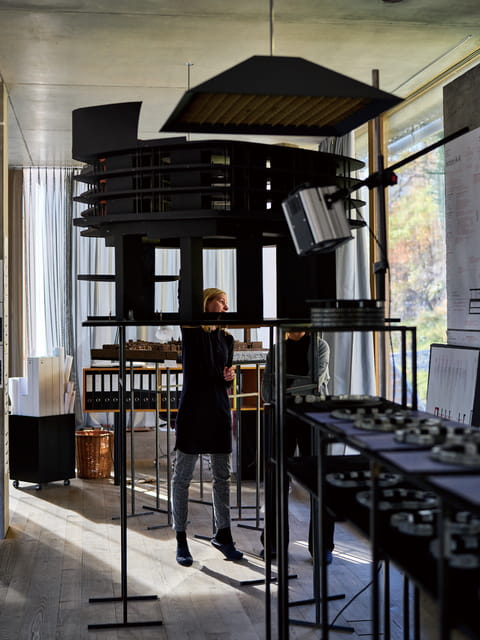
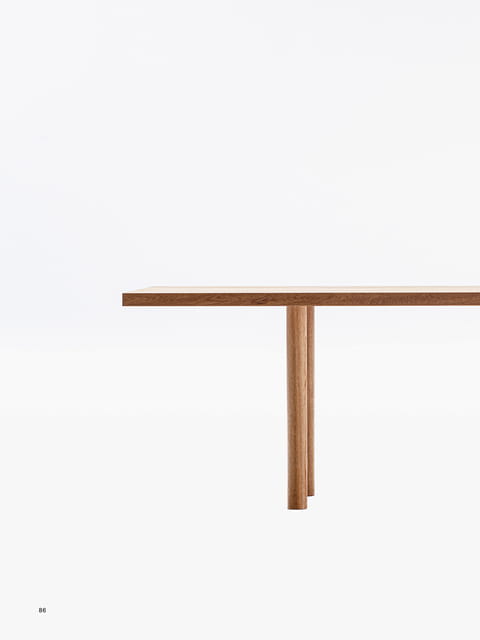
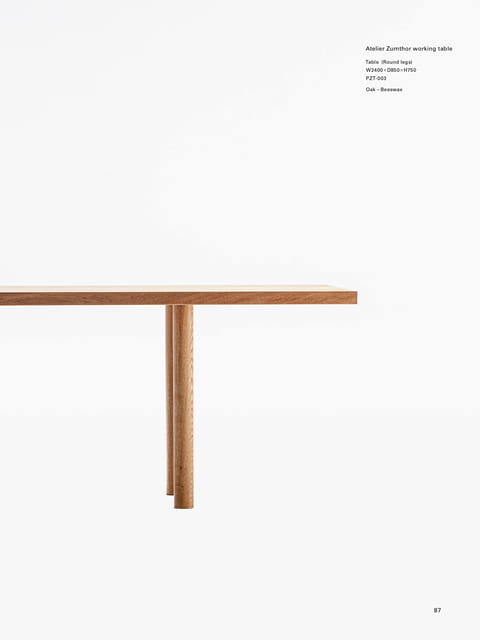
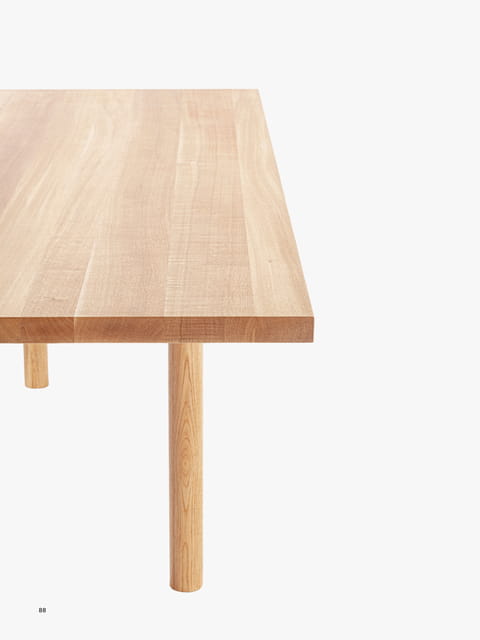
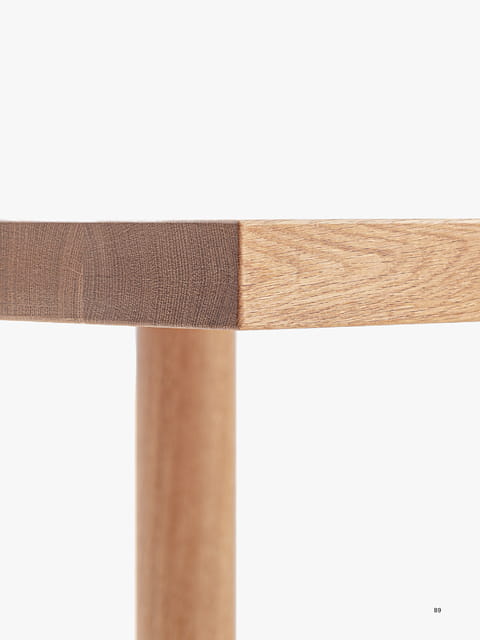
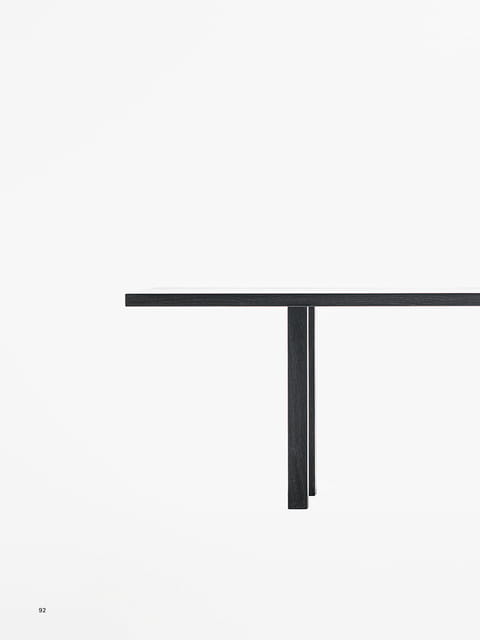
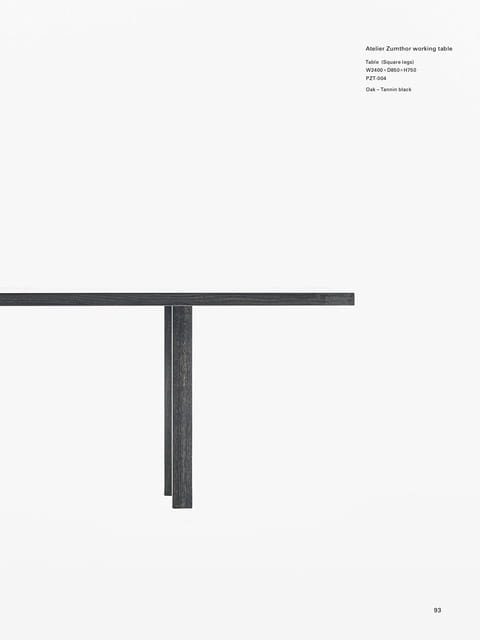
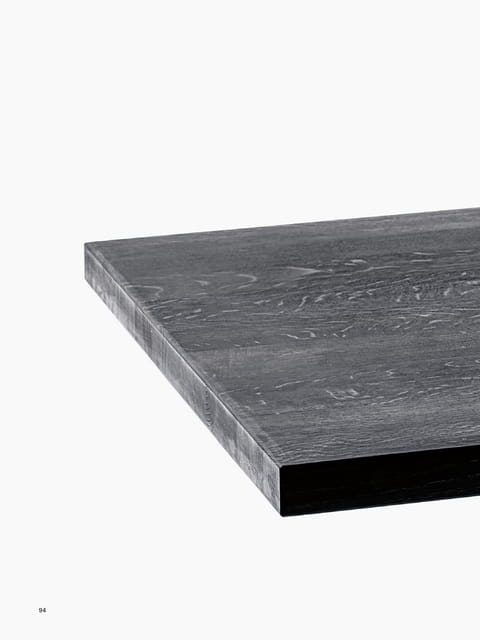
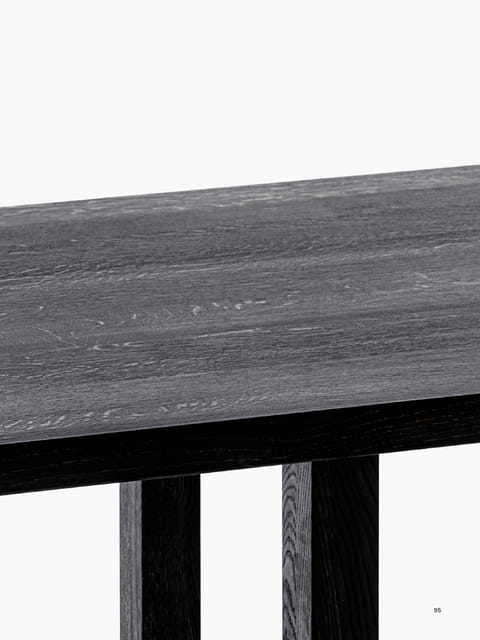
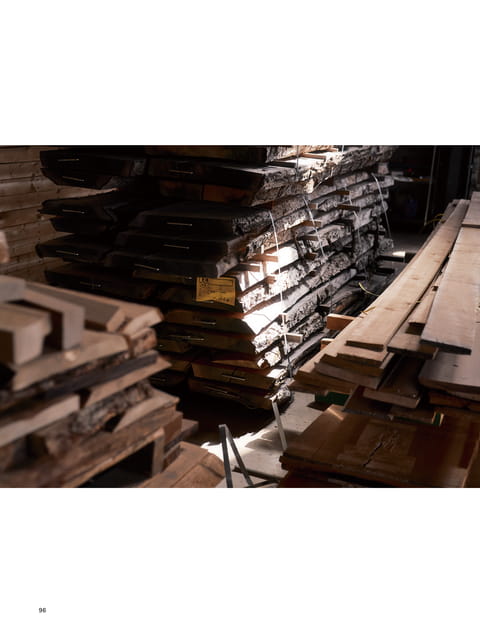
AtelierZumthorworkingtableTableNewatelier|Haldenstein,Switzerland|2015TheminimalistictableisusedinPeterZumthor’sprivatehouseandhisatelierinHaldenstein,Switzerland.Thetabletopmadeofgraftedsolidwoodisminimallydesigned,withfoursolidwoodlegssupportingit.Theshapeiswhatanyonewouldimagineofatable.However,thesize,thickness,positionofthelegs,materials,andfinishesworktogethertocreateanexquisitelybalancedbeautywitharemarkableimpression.Theremovablelegsareavailableinbothroundandsquarecorners.Theyareeasilyinstalledbyscrewingthelegsintothetopboard.Thecleancompositionwithoutambiguitymakesthematerialstandout,givingthefeelingoftouchingrawwood.EachunitismadebyhandattheTime&StyleFactoryinAsahikawa,Hokkaido,anareaknownforitsfurnitureproduction.Twotypesoffinishesareavailable:Time&Style’soriginaltanninblackfinishandbeeswaxfinish,bothofwhichdonotaffectthetextureofthewood.スイスのハルデンシュタインにあるピーター・ズントーの2つのアトリエと自邸でも愛用されているこのテーブルは、シンプルでミニマムに成立している。無垢材を剥ぎ合わせた天板は最小限の意匠に留められ、4本の無垢材の脚が天板を支えている。この形状は、テーブルを思い浮かべた時に、誰もがイメージする普遍的な構成でありながら、天板のサイズと厚み、脚の位置、素材と仕上げが美しくバランスを取りながら緊張感を生み、特別な印象を作り出している。取り外しができる脚は、丸脚と角脚のバリエーションを用意し、取り付けも非常にシンプルで、天板に脚をねじ込むだけで固定できる。曖昧なものが一切ない明快な構成は、素材を際立たせ、木そのものに触れているような感覚を覚える。製作は日本の家具産地である北海道・旭川にあるタイムアンドスタイルファクトリーにて、1台ずつ職人が手作業で製作している。仕上げは木の風合いを感じられるタイムアンドスタイルオリジナルの鉄水仕上とビーズワックス仕上の2種類とした。78
Page 081
Page 082
Page 083
81
Page 084
82
Page 085
Page 086
84
Page 087
Page 088
86
Page 089
AtelierZumthorworkingtableTable(Roundlegs)W2400×D850×H750PZT-003Oak–Beeswax87
Page 090
88
Page 091
89
Page 092
Page 093
91
Page 094
92
Page 095
AtelierZumthorworkingtableTable(Squarelegs)W2400×D850×H750PZT-004Oak–Tanninblack93
Page 096
94
Page 097
95
Page 098
96
Page 099
97
Page 100
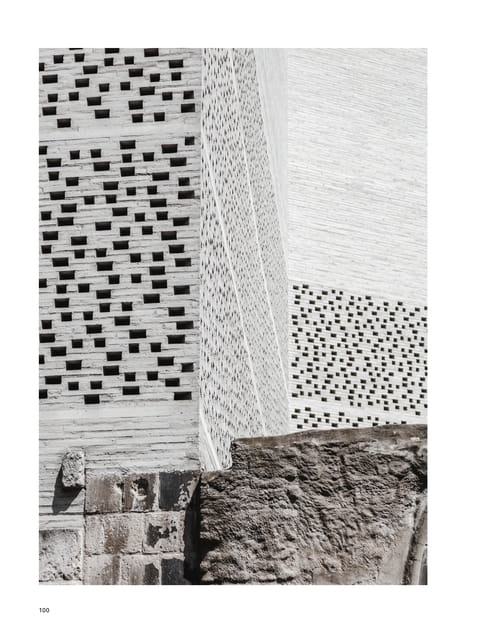
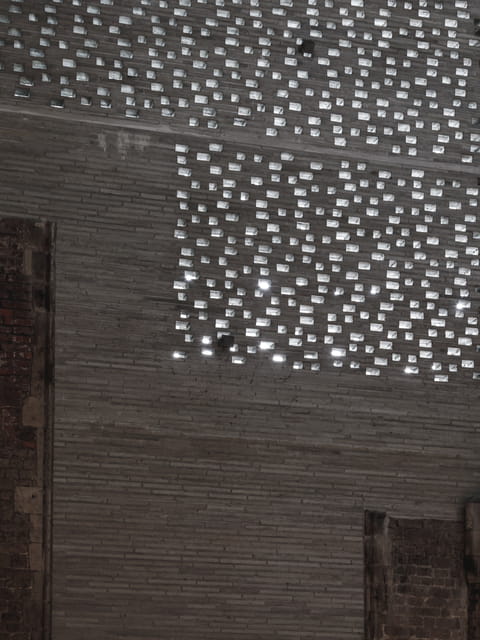
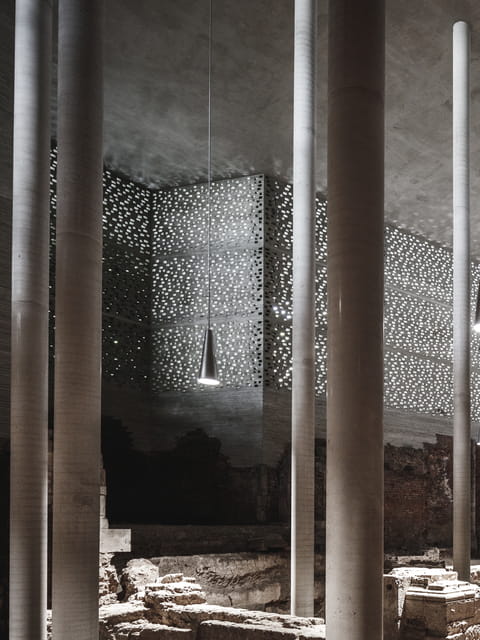
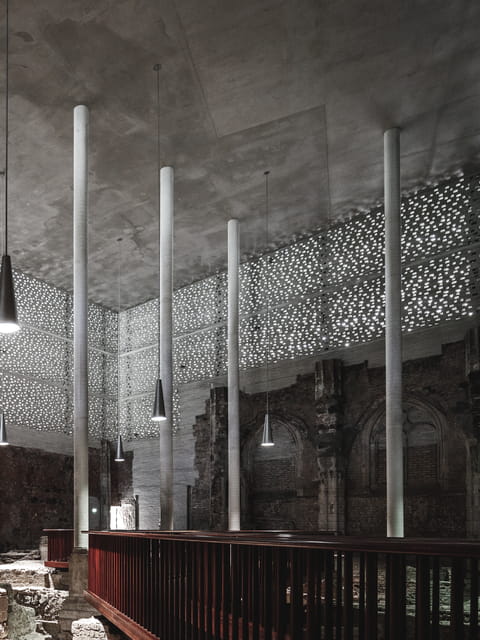
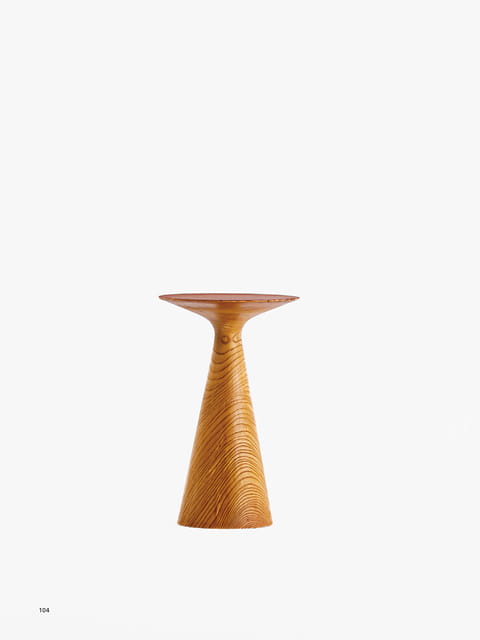
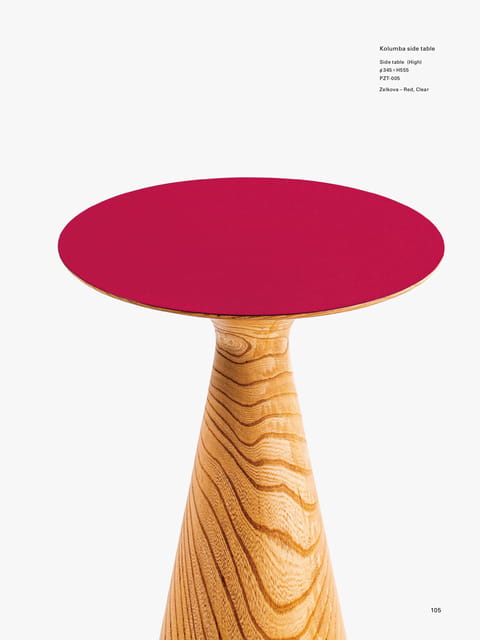
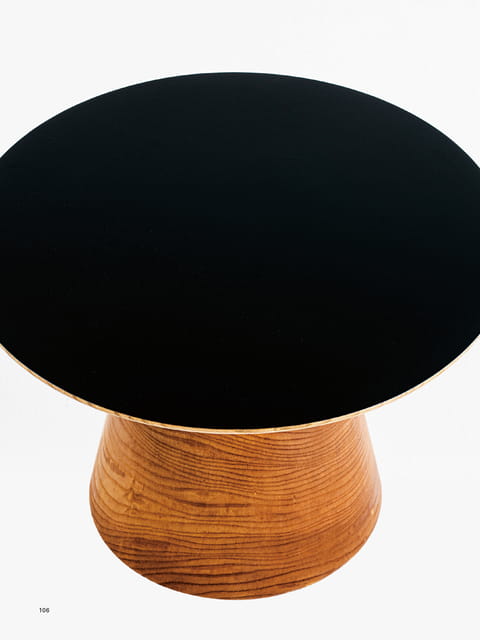
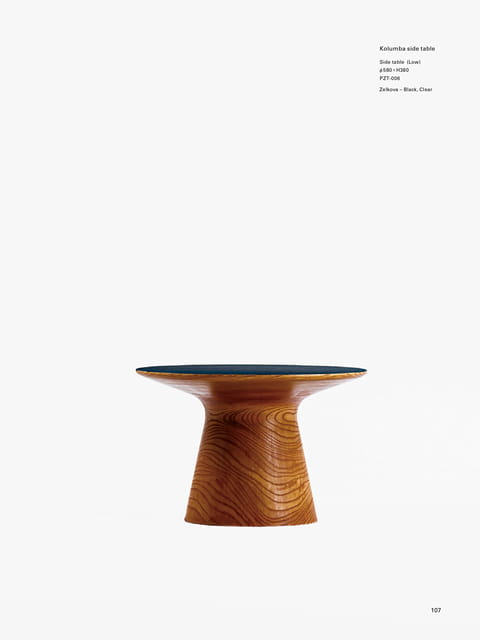
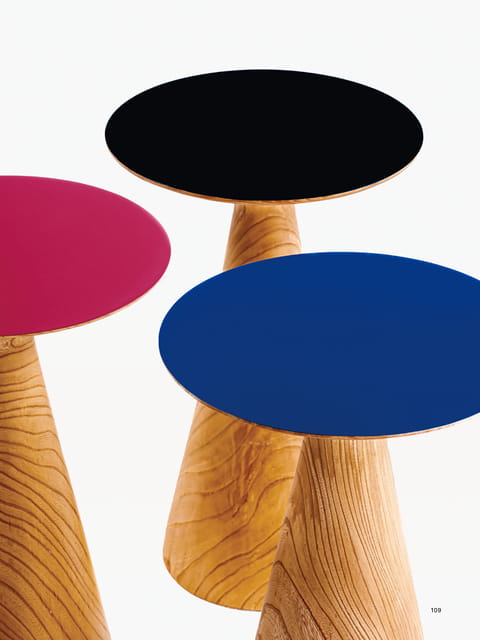
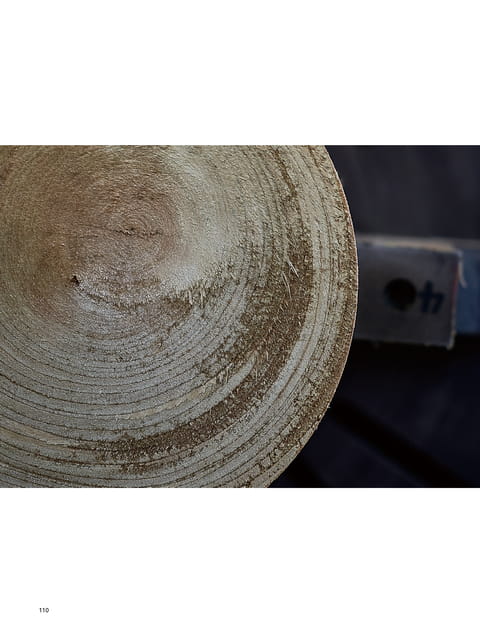
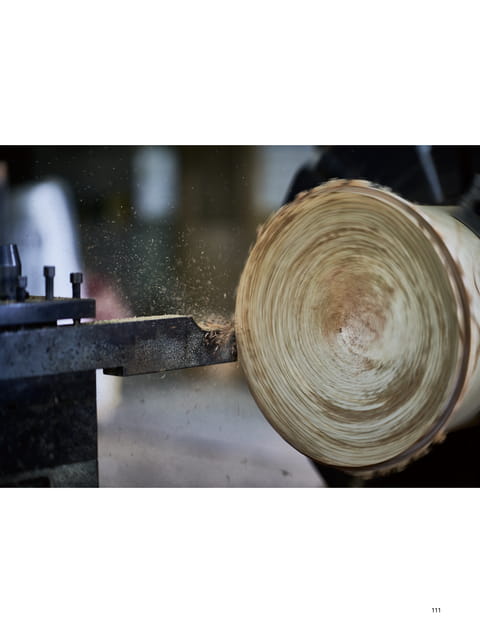
KolumbasidetableSidetableKolumba|Cologne,Germany|2007TheKolumbaMuseumisanexcellentexampleofintegratingtheexistingarchitecturewiththenew.Thesidetablesusedinthemuseum’sreadingroomaremadeusingJapanesematerialsandtechniques.RicecultivationhasbeenthecenterofJapaneseculture,andtraditionssuchaspoundingmochi(ricecakes)forcelebrationsstilllivetoday.Wewonderedifwecouldapplythetechnologyofcarvingoutzelkovalogstomakeusu(mortar)forpoundingriceandthuscreateaproductwithapureform.Thetablecarvedoutfromasinglezelkovalogshowsabeautifulgrainonthesides,withatabletoppaintedwithavibrantcolour.Thepaintisonlyappliedontheverytopsurface,creatingamodernlookofacontrastbetweenthebrightcolourandthenaturalgrain.Thefourbrilliantcolourvariationsaddanaccenttothespace,andthetwodifferentsizevariationscreatearhythm.Atreethathaslivedalongtimeisrebornasapieceoffurnituretobecomeapartofhumanlives.Thecolourchanges,thecracksappear,andtheshapeofthewoodchangesovertime,resemblingtheprimitivestrengthofnature.聖コロンバ教会ケルン大司教区美術館は、既存の建築と新しい建築が見事に融合された美術館である。この美術館の読書室で使われているサイドテーブルを日本の素材と技術を用いて製作した。古くから稲作が行われてきた日本では、祭事に餅つきをして祝う文化が現代にも残っている。欅の丸太を削り出して作られる臼の製造技術を用いて、純粋な形をしたプロダクトを実現できないかと考えた。1本の丸太から削り出されたテーブルの側面は欅の美しい木目を持ち、テーブルの天板は鮮やかなカラーで塗装されている。塗装は天板の縁で切り替わり、塗り重ねられた明快な色彩と圧倒的な存在感を持つ丸太の木目を対比させることで、モダンな印象を与えている。天板の鮮やかな4色のカラーバリエーションは空間に彩りを与え、2種類のサイズバリエーションによってリズムを生む。長い時間を生きてきた1本の木は、家具として生まれ変わり、人々の生活の中で新しい時間を刻んでいく。時間を経ることで色が変わり、時にはヒビが入り、姿が変化していく様は、原始的な自然の力強さを人々の感覚に訴えかけてくる。98
Page 101
Page 102
100
Page 103
Page 104
Page 105
Page 106
104
Page 107
KolumbasidetableSidetable(High)φ345×H555PZT-005Zelkova–Red,Clear105
Page 108
106
Page 109
KolumbasidetableSidetable(Low)φ580×H380PZT-006Zelkova–Black,Clear107

Page 110
108
Page 111
109
Page 112
110
Page 113
111
Page 114
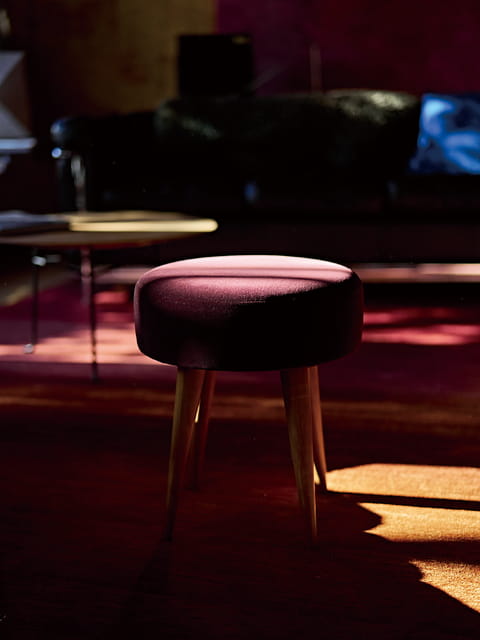
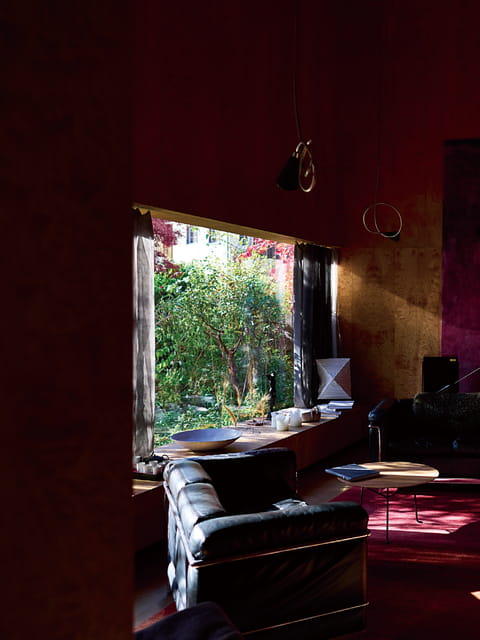
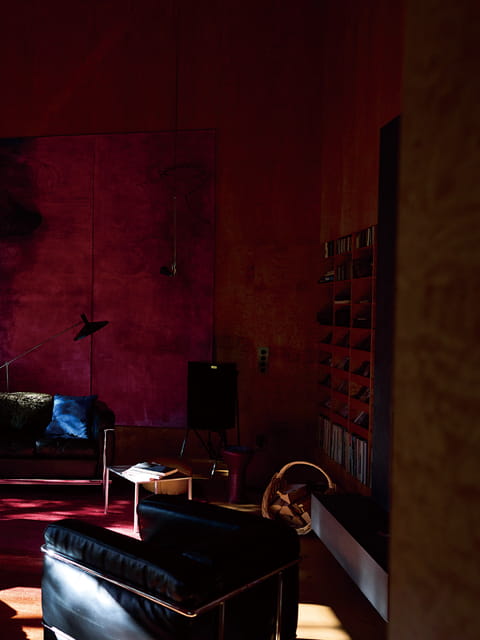
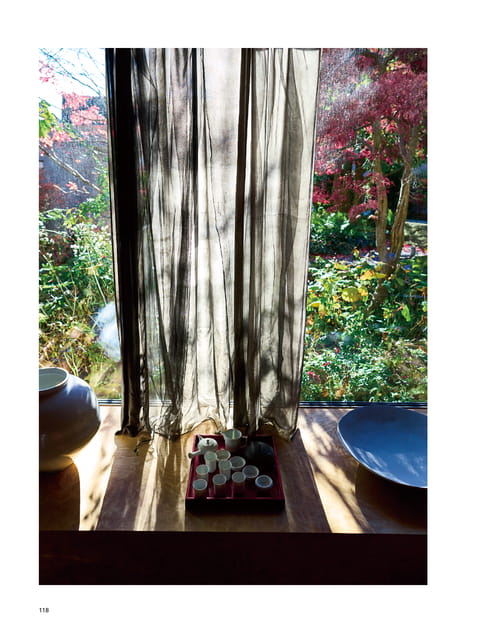
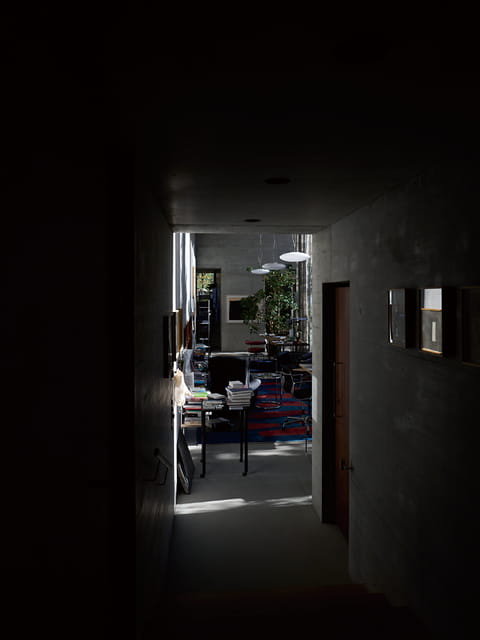
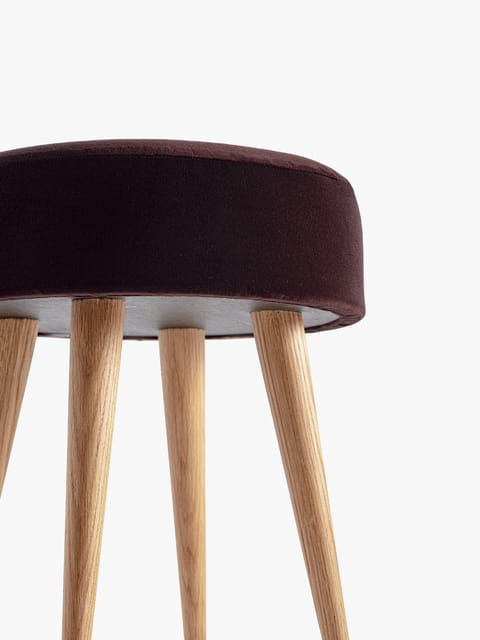
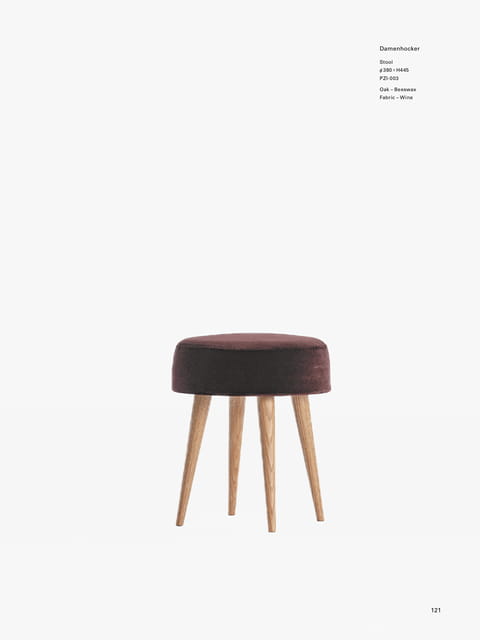
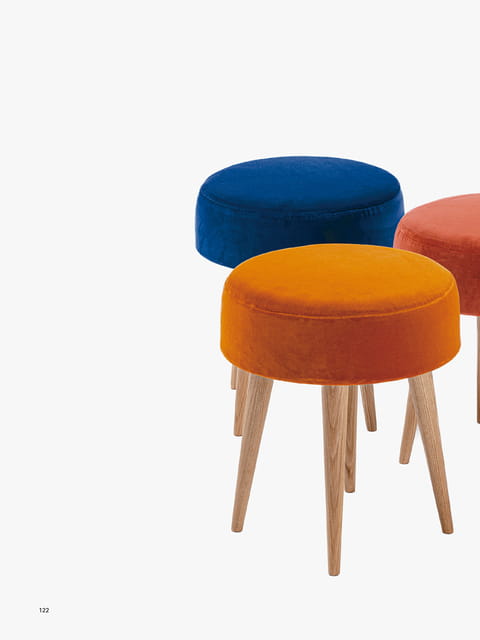
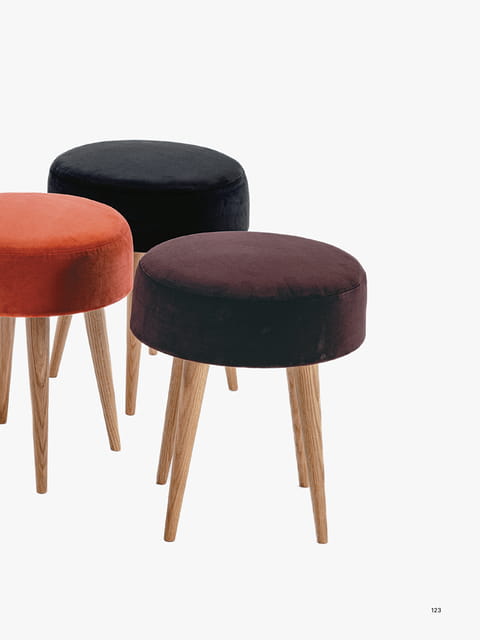
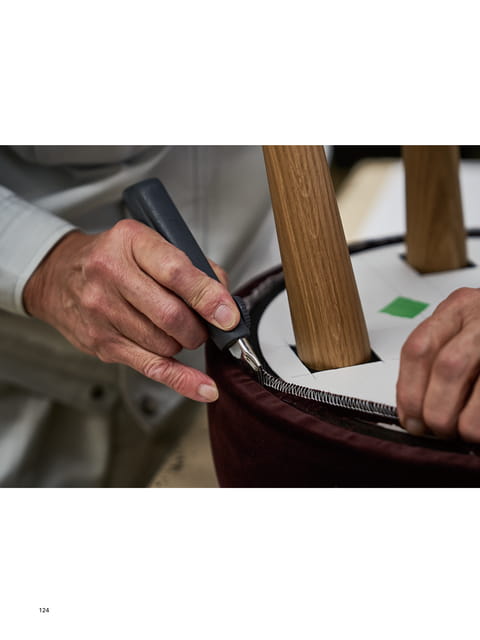
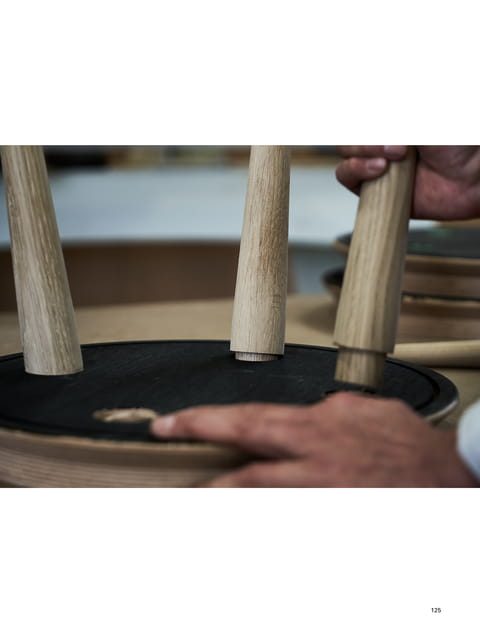
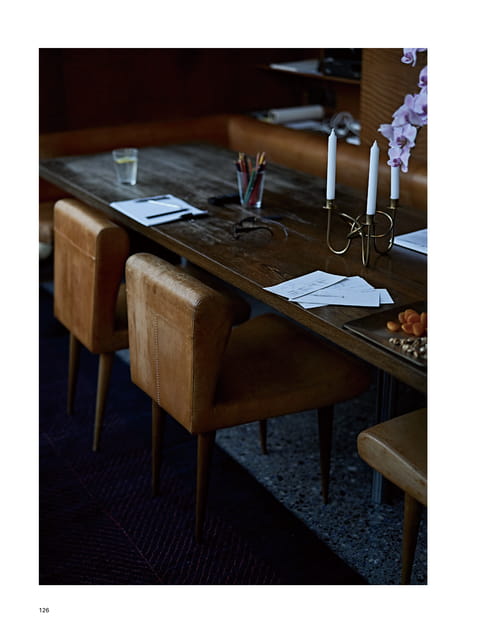
DamenhockerStoolZumthorHouse|Haldenstein,Switzerland|2005PeterZumthor’sprivatehouseandatelierinHaldenstein,Switzerland,islocatednexttohiswoodenatelierbuiltinthe1980s.Thefour-leggedstoolusedinthemusicroomissimple,comfortable,andupholsteredinbrightvelourfabric.ItcanalsobefoundinthewoodenLeishouses,holidayhousesalsodesignedbyZumthor.NamedDamenhocker(ladies’stool),thestoolhasaclassicandsophisticatedlookwithahintofdelicacyandcutenessbutalsoadignifiedappearance.Ithasapresenceonitsownbutcanbealignedorrandomlyarranged.Thelegscarvedoutofsolidwoodarethinnedtowardstheground,liftingtheplumpseatingintheair.Thebackoftheseatingisfinishedinoakveneerinblackcolour.Thenaturallyfinishedlegscreateacleancompositionwiththeseating.TheseatingisupholsteredwithcolourfulvelourfabricsfromaSwisscompany,ChristianFischbacher,availableinfivedifferentcolourstomatchthespace.Theupholsteryispipedontotheplywoodontheback,carefullyfinishedevenwhereitisnotvisible.スイスのハルデンシュタインにあるピーター・ズントーの自宅兼アトリエは、1980年代に建てられた木造アトリエのすぐ近くにある。この自宅の音楽室やアトリエ、ピーター・ズントーが設計した貸別荘ライス・ハウスで使われている4本脚のスツールは、シンプルで座り心地が良く、鮮やかなベロア生地で張られている。Damenhocker(女性のスツール)と名付けられたそのスツールは、クラシックで洗練された雰囲気の中に優しさや可愛らしさ、さらには凛々しい佇まいを持ち、1脚でも存在感があり、並べたりランダムに置いても成立する。丸く削り出された木脚は地面に向かって細く絞られ、柔らかく膨らんだ丸い座面を軽やかに持ち上げている。黒色の突板で仕上げられた座裏は脚の表情と対比させることで、座面との構成がより明確になる。座面にはスイスのクリスチャン・フィッシュバッハ社の発色の良いベロア生地5色の中から空間に合わせて選ぶことができる。生地は座裏の木部にパイピングで留め、目に触れない部分も丁寧に仕上げている。112
Page 115
Page 116
Page 117
115
Page 118
Page 119
Page 120
118
Page 121
Page 122
Page 123
DamenhockerStoolφ380×H445PZI-003Oak–BeeswaxFabric–Wine121
Page 124
122
Page 125
123
Page 126
124
Page 127
125
Page 128
126
Page 129
Page 130
Page 131
Page 132
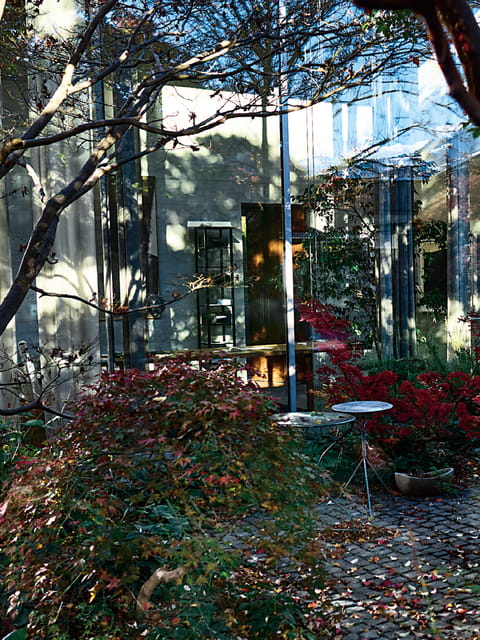
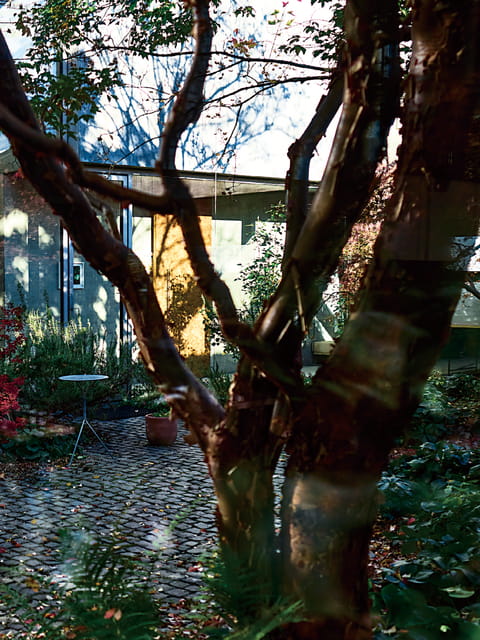
SynchronicityTraditionalJapanesearchitecturethathasadirectinfluencefromEasternculturesbuthasgonethroughuniquedevelopmentinJapan,hasastrongaffinitywiththearchitecturalworksofPeterZumthor.Sinceancienttimes,theJapanesehavelongregardedspiritstodwellinwater,rocks,andtrees,believinginlivinginharmonywithnature.Japanhasalsobeenhometorichartisanshipandwoodenarchitecture,whichwereimportedfromChinaandKorea1500yearsago,introducedalongwithBuddhism.Eveninaclimatepronetonaturaldisasters,theuseofmaterialssuchaswood,stone,earth,andironhavesustainedarchitectureformorethanathousandyears.ThetraditionalJapanesetechniquesdevelopedovertimewithsuchmaterialshavemanyconnectionswithZumthor’sarchitectureandphilosophy,inawaythattheybothutilizetheessentialcharacteristicsandpresenceofthematerialstocreateapermanentatmosphere.NotasingledecorativeelementisfoundinthefurniturebyPeterZumthor.Thefunctionalityisthedesign,beauty,anditssoleexistence.Therelationsbetweeneverymaterialandstructure,formanddetail,arethereforareason.Eachmaterialhasitsuniqueproperties,withbothadvantagesandlimitations.Howonemakesthemostofitscharacteristicsdependsonhowlongonehasspentstudyingthematerial.Onlywithexperience,thecoexistenceisrealizedbetweentruefunctionality,thedurabilityofthematerial,anduniversalbeauty.InasensethatZumthor’sfurniturecreationshavethefunctionalbeautyoftoolsbornfromnecessity,webelievetheyhavealotincommonwiththeuniversalityoftraditionalJapanesearchitectureandcrafts.Intheproductionphaseofthecollection,werentedagalleryinChur,Switzerland,toexaminetheprototypeswithPeterZumthor.WeaskedhimtotouchthecornersoftheAtelierZumthorworkingtablethatwasmadeasperthedrawings,whereherealizedweretoosharp.LaterwesentthreedifferentsamplesofthecornersfromJapan,respondingtohisrequesttochamfertheedges.“Thissharpedgeismeinmythirties,thisedgeismeinmyfortiesandfifties...”hedescribed,tracingwithhisfingersthesampleswithrounderandsofteredges.Whiletouchingtheroundestedgewithhispalm,hecontinuedtojokinglyyetconciselycomparehistransitioninthefurnituredesigntotheshapeofthetabletopcorners,“ThisedgeiswhatIaminmysixties.”130
Page 133
私たち日本人は、ピーター・ズントーの建築と、東洋文化を吸収して独自に昇華させてきた日本の伝統建築との間に親和性を抱いています。日本では古くから水や石や木に神が宿ると考え、自然と共生し崇拝する神道を信仰してきました。また、1500年程前に中国や朝鮮から仏教が伝来したころから木造建築や多様な工芸の職人技術が飛躍的に発展し、脈々と受け継がれてきました。自然災害の多い日本の気候風土の中で、古典建築を1000年以上に渡り支えてきた木材と石材、土や鉄などの自然素材、そして時間を掛けて高められてきた伝統技術は、素材の本質的な存在感と特性を生かしながら、普遍的な空気感を創造するズントーの建築と哲学に多くの繋がりを見出すことができます。彼の家具には装飾的要素が存在しません。家具の機能性が即ちデザインとなり、美となり存在しています。全ての素材と構造、そして形状とディテールの関係は必然性の上に成り立っています。それぞれの素材には独自の性質があり、利点と限界点があります。素材をどのように認識し、特性と利点を生かすことができるかは、長い時間を掛けて素材と向き合い推敲した経験にかかっています。経験なくして、真の機能性、素材の耐久性、そして普遍的な美しさを共存させることはできません。ズントーが創造する家具は、必然から生まれた道具の機能美を備えており、日本の古典建築や伝統工芸が持つ普遍性に共通していると感じます。スイスのクールにあるギャラリーを借りて、ズントーとコレクションプロダクトのプロトタイプの検証を行ったとき、図面通りに製作したAtelierZumthorworkingtableの天板の角を直接触ってもらいました。その際、彼からテーブル天板のエッジが鋭角すぎるのでもう少し丸く面取りしたものを製作してほしいという要望があり、私たちは後日、日本の工場で3種類のエッジのサンプルを製作してスイスに送りました。オリジナルよりも大きく、柔らかに面取りしたそれぞれのサンプルを彼は指で触りながら、「この鋭いエッジは私の30代、このエッジは40、50代…」、そして最も丸く削り取られた優しいエッジを手の平で撫でながら、「このエッジは60代の今の私だな」と、天板のエッジの形状と彼の年齢による家具の在り方の変化を、冗談を交えながら丁寧に教えてくれました。131
Page 134
Page 135
Page 136
Page 137
135
Page 138
Page 139
Page 140
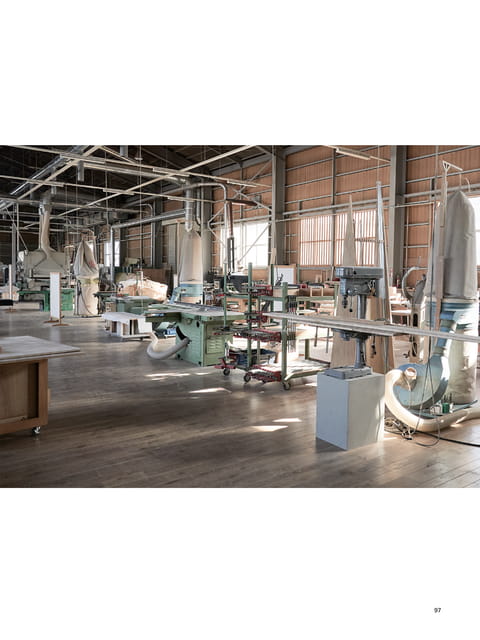
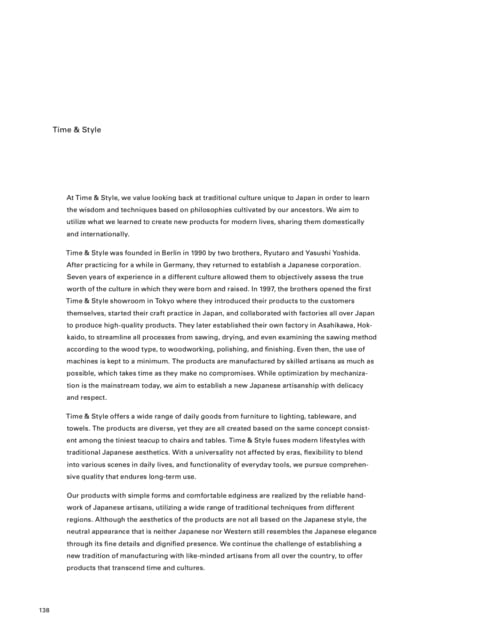
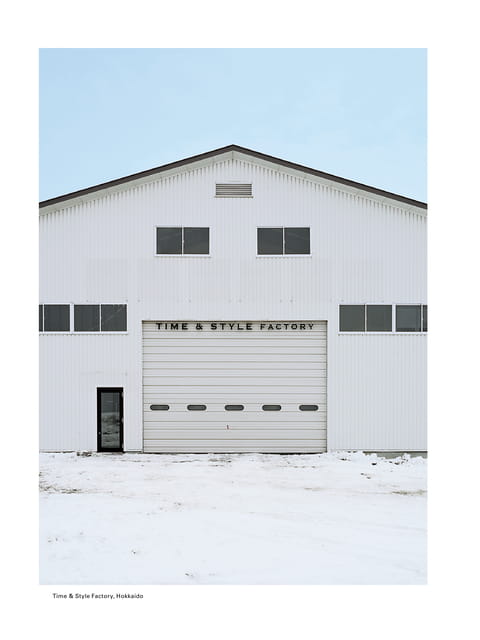
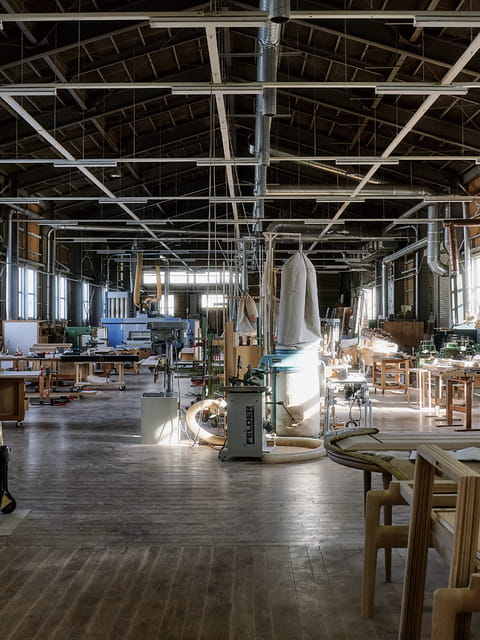
Time&StyleAtTime&Style,wevaluelookingbackattraditionalcultureuniquetoJapaninordertolearnthewisdomandtechniquesbasedonphilosophiescultivatedbyourancestors.Weaimtoutilizewhatwelearnedtocreatenewproductsformodernlives,sharingthemdomesticallyandinternationally.Time&StylewasfoundedinBerlinin1990bytwobrothers,RyutaroandYasushiYoshida.AfterpracticingforawhileinGermany,theyreturnedtoestablishaJapanesecorporation.Sevenyearsofexperienceinadifferentcultureallowedthemtoobjectivelyassessthetrueworthofthecultureinwhichtheywerebornandraised.In1997,thebrothersopenedthefirstTime&StyleshowroominTokyowheretheyintroducedtheirproductstothecustomersthemselves,startedtheircraftpracticeinJapan,andcollaboratedwithfactoriesalloverJapantoproducehigh-qualityproducts.TheylaterestablishedtheirownfactoryinAsahikawa,Hokkaido,tostreamlineallprocessesfromsawing,drying,andevenexaminingthesawingmethodaccordingtothewoodtype,towoodworking,polishing,andfinishing.Eventhen,theuseofmachinesiskepttoaminimum.Theproductsaremanufacturedbyskilledartisansasmuchaspossible,whichtakestimeastheymakenocompromises.Whileoptimizationbymechanizationisthemainstreamtoday,weaimtoestablishanewJapaneseartisanshipwithdelicacyandrespect.Time&Styleoffersawiderangeofdailygoodsfromfurnituretolighting,tableware,andtowels.Theproductsarediverse,yettheyareallcreatedbasedonthesameconceptconsistentamongthetiniestteacuptochairsandtables.Time&StylefusesmodernlifestyleswithtraditionalJapaneseaesthetics.Withauniversalitynotaffectedbyeras,flexibilitytoblendintovariousscenesindailylives,andfunctionalityofeverydaytools,wepursuecomprehensivequalitythatendureslong-termuse.OurproductswithsimpleformsandcomfortableedginessarerealizedbythereliablehandworkofJapaneseartisans,utilizingawiderangeoftraditionaltechniquesfromdifferentregions.AlthoughtheaestheticsoftheproductsarenotallbasedontheJapanesestyle,theneutralappearancethatisneitherJapanesenorWesternstillresemblestheJapaneseelegancethroughitsfinedetailsanddignifiedpresence.Wecontinuethechallengeofestablishinganewtraditionofmanufacturingwithlike-mindedartisansfromalloverthecountry,toofferproductsthattranscendtimeandcultures.138
Page 141
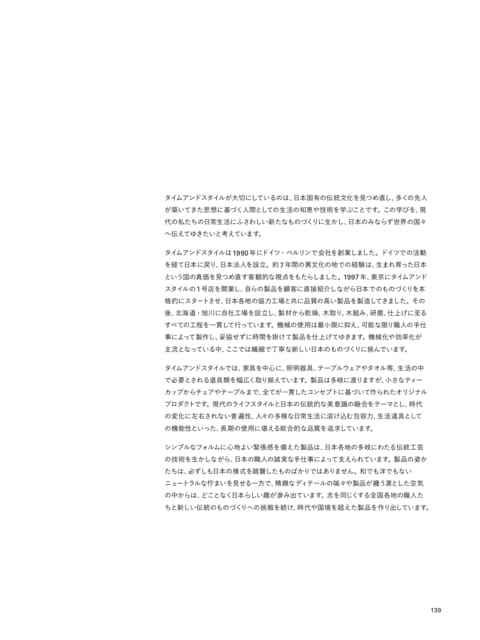
タイムアンドスタイルが大切にしているのは、日本固有の伝統文化を見つめ直し、多くの先人が築いてきた思想に基づく人間としての生活の知恵や技術を学ぶことです。この学びを、現代の私たちの日常生活にふさわしい新たなものづくりに生かし、日本のみならず世界の国々へ伝えてゆきたいと考えています。タイムアンドスタイルは1990年にドイツ・ベルリンで会社を創業しました。ドイツでの活動を経て日本に戻り、日本法人を設立。約7年間の異文化の地での経験は、生まれ育った日本という国の真価を見つめ直す客観的な視点をもたらしました。1997年、東京にタイムアンドスタイルの1号店を開業し、自らの製品を顧客に直接紹介しながら日本でのものづくりを本格的にスタートさせ、日本各地の協力工場と共に品質の高い製品を製造してきました。その後、北海道・旭川に自社工場を設立し、製材から乾燥、木取り、木組み、研磨、仕上げに至るすべての工程を一貫して行っています。機械の使用は最小限に抑え、可能な限り職人の手仕事によって製作し、妥協せずに時間を掛けて製品を仕上げてゆきます。機械化や効率化が主流となっている中、ここでは繊細で丁寧な新しい日本のものづくりに挑んでいます。タイムアンドスタイルでは、家具を中心に、照明器具、テーブルウェアやタオル等、生活の中で必要とされる道具類を幅広く取り揃えています。製品は多岐に渡りますが、小さなティーカップからチェアやテーブルまで、全てが一貫したコンセプトに基づいて作られたオリジナルプロダクトです。現代のライフスタイルと日本の伝統的な美意識の融合をテーマとし、時代の変化に左右されない普遍性、人々の多様な日常生活に溶け込む包容力、生活道具としての機能性といった、長期の使用に堪える総合的な品質を追求しています。シンプルなフォルムに心地よい緊張感を備えた製品は、日本各地の多岐にわたる伝統工芸の技術を生かしながら、日本の職人の誠実な手仕事によって支えられています。製品の姿かたちは、必ずしも日本の様式を踏襲したものばかりではありません。和でも洋でもないニュートラルな佇まいを見せる一方で、精緻なディテールの端々や製品が纏う凛とした空気の中からは、どことなく日本らしい趣が滲み出ています。志を同じくする全国各地の職人たちと新しい伝統のものづくりへの挑戦を続け、時代や国境を超えた製品を作り出しています。139
Page 142
Time&StyleFactory,Hokkaido
Page 143
Page 144
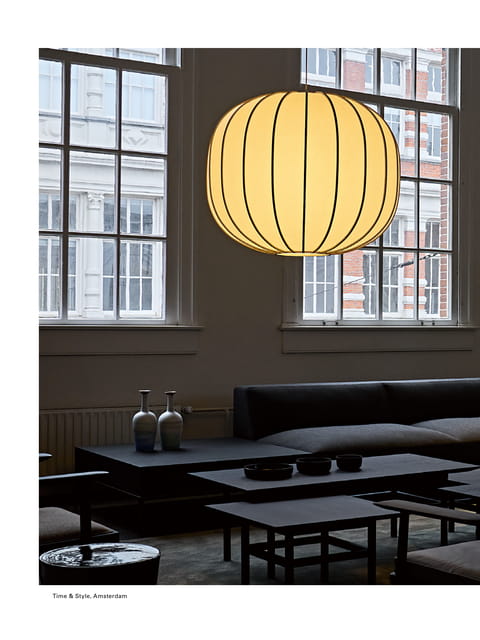
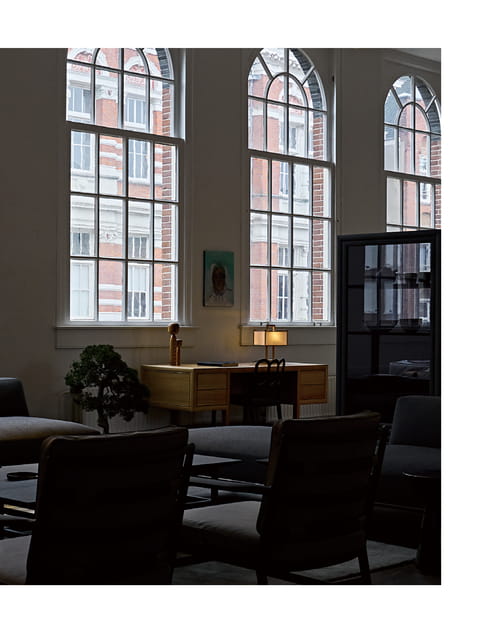
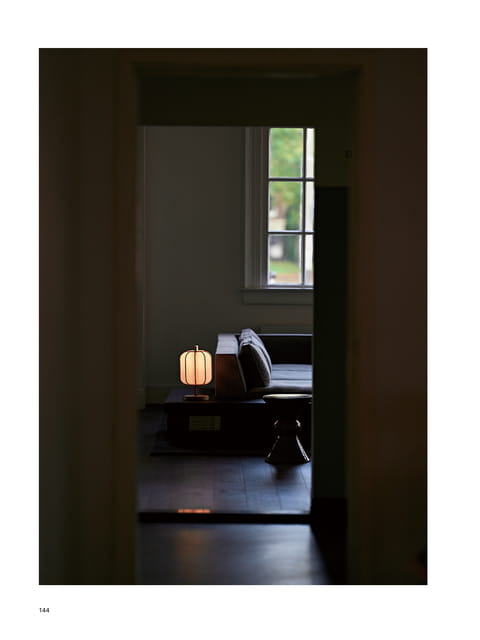
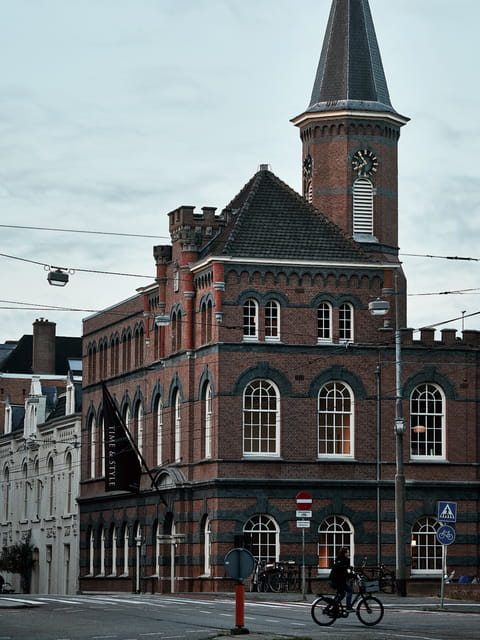
Time&Style,Amsterdam
Page 145
Page 146
144
Page 147
Page 148
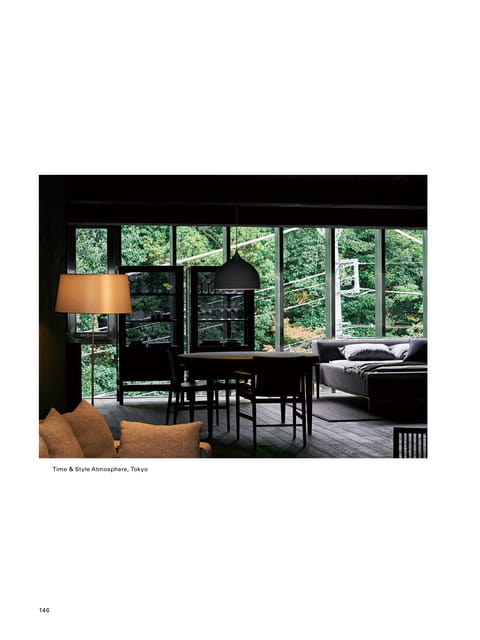
Time&StyleAtmosphere,Tokyo146
Page 149
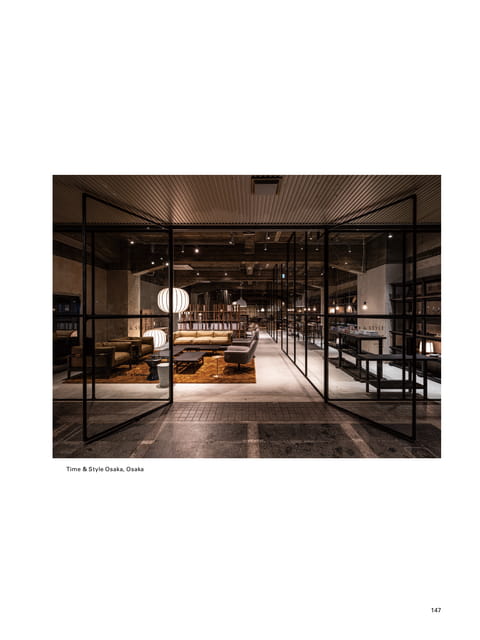
Time&StyleOsaka,Osaka147
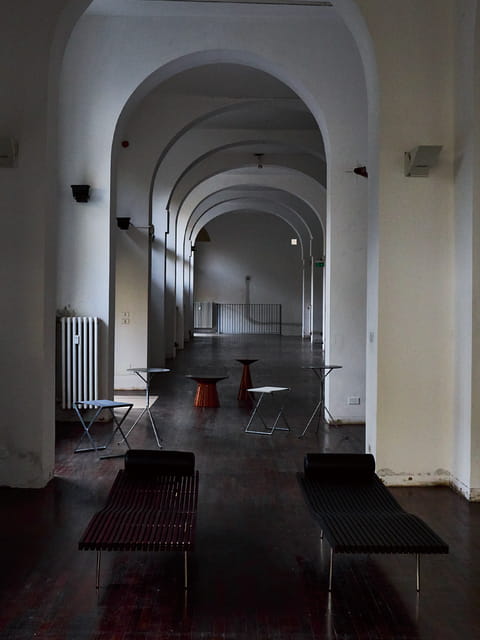
Page 150
Page 151
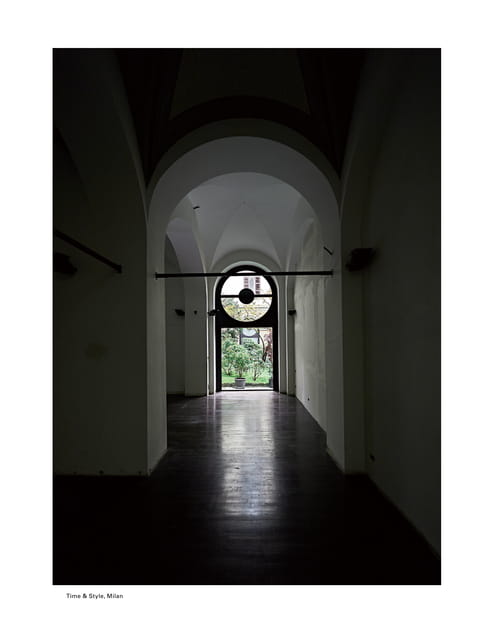
Time&Style,Milan
Page 152
Contactpz@timeandstyle.comwww.timeandstyle.comShowroomItalyTime&StyleViaEugenioBalzan,4,LargoClaudioTreves,2,ViaSanMarco,13,20121Milan,ItalyTel+390249658560TheNetherlandsTime&StyleMarnixstraat148,1016TEAmsterdam,theNetherlandsTel+31(0)202103176JapanTime&StyleAtmosphere4-27-15Minamiaoyama,Minato-ku,Tokyo107-0062JapanTel+81(0)354643205Time&StyleMidtownTokyoMidtownGalleria3F,9-7-4Akasaka,Minato-ku,Tokyo107-0052JapanTel+81(0)354133501Time&StyleResidenceTamagawa-TakashimayaSCSouthBldg.6F,3-17-1Tamagawa,Setagaya-ku,Tokyo158-0094JapanTel+81(0)357973271Time&StyleIsetanShinjukuIsetanShinjukuMainBldg.5F,3-14-1Shinjuku,Shinjuku-ku,Tokyo160-0022JapanTel+81(0)333521111Time&StyleOsakaOsakaShashinKaikan1F,2-7-14Minamisemba,Chuo-ku,Osaka542-0081JapanTel+81(0)647083441

Page 153
-ProductsinthiscatalogueareavailablefromApril2022onwards.Inordertoimprovequality,wemaymodifyspecificationanddesignordiscontinueproductionwithoutapriornotice.-Listedsizesareallinmmunits.Dimensionsmayvaryslightlyduetotheproduction.W:width,D:depth,H:height,SH:seatheight,φ:diameter.-Thiscataloguecontainsphotographsofprototypes.Theymayvaryslightlyfromtheactualproduct’sspecifications.-本カタログに掲載している製品は2022年4月現在の取扱製品です。品質改良のため、予告なく仕様・デザインの変更、または、販売中止・生産中止を実施する場合があります。-サイズの表示はすべてミリメートル(mm)単位です。製品により多少の誤差を生じる場合があります。W:幅D:奥行きH:高さSH:座面高さφ:直径-本カタログにはプロトタイプを撮影した写真が含まれています。実際の製品の仕様と多少異なる場合があります。
Page 154
PrestigeJapanInc.5610Bldg.2F,5-6-10MinamiaoyamaMinato-ku,Tokyo107-0062JapanTel+81(0)354643208pz@timeandstyle.comwww.timeandstyle.comArtdirectionTime&StylePhotographyShinjiHosonoMasatoshiMoriAldoAmoretti(p14–15,p18–19,p22–23)AndrewMeredith(p16–17)RasmusHjortshøj–COAST(p20–21,p100,p101,p102–103)Viabizzuno/GiorgioDeVecchi(p63,p64,p65,p70–71)Viabizzuno/PietroSavorelli(p99)ⓒ2022PrestigeJapanInc.PrintedinJapanISBN978-4-9911621-2-1

Page 155